Vacate Inspection Melbourne: What Agents Check Room by Room

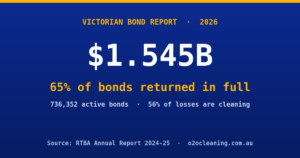
Your vacate inspection decides whether you walk away with a full bond refund or a deduction letter. According to the RTBA Annual Report 2024–25, 65% of Victorian bonds are returned in full, but 35% of tenants lose some or all of their bond, and 10% lose the full amount. With Melbourne’s median weekly rent at $580 for houses and $581 for units as of February 2025 (REIV), a standard four-week bond is roughly $2,320 — real money worth protecting. This guide walks you through what agents actually inspect, room by room, and what Victorian law lets them claim against you.
For the complete bond-back service, see our end of lease cleaning in Melbourne page.
What Is a Vacate Inspection in Melbourne?
A vacate inspection is the final walk-through your agent does after you hand back the keys. They compare the property against the entry condition report and the Victorian “reasonably clean” standard. Nearly 2,000 notices to vacate are issued in Victoria every week, according to the Renting in Victoria 2024 Snapshot (Commissioner for Residential Tenancies).
The agent inspects every room, photographs anything they consider damage or excess wear, and produces an exit condition report. That report becomes the evidence file if a bond claim is later disputed. You have a legal right to be present, and we strongly suggest you take it. Bring your entry condition report and your own photos.
Most inspections take 30 to 60 minutes for a standard apartment, longer for houses with a garage and garden. The agent’s job at this point isn’t to find perfection. It’s to confirm the home is in the same condition as when you moved in, allowing for fair wear and tear. A practical end of lease cleaning checklist is the single best preparation tool.
What Does “Reasonably Clean” Mean Under Victorian Law?
Section 63 of the Residential Tenancies Act 1997 (Vic) requires you to leave the property “reasonably clean.” Consumer Affairs Victoria Guideline 2 defines this as “free from marks, dirt, cobwebs, stains and dust, and any extra cleaning won’t improve it.” Not spotless. Not messy. Average community standard.
That last phrase matters. If extra cleaning genuinely wouldn’t improve the surface, you’ve met the standard. A faintly aged oven that has been thoroughly degreased is acceptable, even if it isn’t showroom-shiny. A 20-year-old carpet that’s been steam cleaned is acceptable, even if some traffic lanes still look tired.
The other anchor is the entry condition report. You cannot be held to a higher standard than the property was in when you moved in. If the oven had baked-on grease at handover and you noted it, the agent can’t demand a perfect oven on exit. This is why we tell every renter: photograph every surface on day one and keep those files for the entire tenancy.
What Do Agents Check in the Kitchen?

The kitchen is where most bond claims start. Cleaning is consistently the leading category in Australian bond dispute data, and the kitchen drives most of those flags. Agents focus on grease and limescale because those are the surfaces that fail the “extra cleaning won’t improve it” test. Fixed-price end of lease cleaning prices in Melbourne reflect this risk: the kitchen alone often takes a third of the total clean time.
Here’s exactly what your agent will open, lift, and wipe a finger across:
- Oven interior: walls, racks, tray, door glass, and the rubber door seal — all degreased, no baked-on residue
- Rangehood: filter removed and degreased, canopy exterior wiped, light cover cleaned
- Stovetop: burner grates, drip trays, gas ring holders fully degreased and free of carbon
- Dishwasher: filter cleared, interior wiped, rubber door seal checked for grime
- Splashback: degreased and polished — fine grease spray often hides here
- Cupboards and drawers: inside, outside, and handles, including the kickboards underneath
- Sink and taps: limescale removed, taps polished, drain free of residue
- Benchtops: all stains, water rings, and oil marks lifted
What Do Agents Check in Bathrooms and Ensuite?

Bathrooms are the second highest risk room at a Melbourne vacate inspection. Calcium scale on shower screens and tenant-caused mould in grout are the two flags that trigger most bathroom deductions. Under Victoria’s 2021 rental reforms, pre-existing mould or mould caused by structural issues, like poor ventilation or roof leaks, is the rental provider’s responsibility, not yours.
- Shower screen: calcium deposits and soap scum descaled, glass streak-free
- Grout lines: tenant-caused surface mould scrubbed out (structural mould stays the landlord’s problem)
- Toilet: bowl including under the rim, cistern, seat, hinges, and base behind the pedestal
- Vanity and basin: limescale on taps, soap residue around the drain, mirror polished streak-free
- Exhaust fan: dust pulled from the vent cover, blades wiped if accessible
- Floor and floor grout: mopped, grout lines cleaned, no hair behind the toilet
If your agent flags black mould in a bathroom that has no openable window and a weak exhaust fan, push back politely. That’s a building issue, not a cleaning issue.
What Do Agents Check in Bedrooms?

Bedrooms get a quicker scan than wet areas, but agents still open every wardrobe and run a hand along skirting boards. The most commonly missed item across thousands of Melbourne vacate cleans is the window track. Dust, dead insects, and grit collect there, and a finger-swipe is all it takes to fail that check.
- Walls: spot-checked for scuffs and fingerprints, especially around light switches and door frames
- Wardrobes: shelves, rails, and drawers wiped — dust and forgotten coat hangers removed
- Light fittings: dust removed, dead insects cleared from bowl-style covers
- Skirting boards: wiped clean of dust, especially behind where furniture sat
- Carpet: vacuumed and stains treated (steam cleaning is only required if it was steam cleaned at entry and noted in the condition report)
- Window tracks and sills: dirt, dead insects, and dust removed — frequently missed
- Ceiling fans: blades dusted on top and bottom edges
What Do Agents Check in Living Areas?
Living areas are large, open, and easy to underestimate. Agents look at floor finish, wall marks behind where furniture stood, and window tracks. In our cleans across inner Melbourne, the single biggest reason a living-area inspection fails isn’t the carpet. It’s the sliding door track — the one that opens onto the balcony. Tenants almost never clean it, and agents almost always check it.
- Floors or carpet: hard floors mopped, carpet vacuumed, traffic stains spot-treated
- Walls: marks lifted, especially behind sofas, beds, and TV stands
- Window tracks: dirt and dead insects removed — the most commonly flagged miss
- Blinds: wiped flat-blind or each slat cleaned individually for venetians
- Light switches and power points: fingerprints and grime wiped off
- Skirting boards and architraves: wiped clean, no dust ridge along the top edge
What Do Agents Check Outside (Garage, Garden, Outdoor)?

If your property has a garage, garden, or yard, the agent will inspect those too. The standard isn’t landscaped perfection, it’s the condition recorded in your entry report. A garden you received with mown lawn and trimmed edges must be returned that way. Personal belongings and rubbish are the easy fail here, leave nothing behind.
- Garage: swept clean, oil stains noted (not always claimable), all personal items removed
- Garden: lawn mowed, edges trimmed, weeds pulled from beds and paths
- Paths, patio, and decking: swept, leaf litter cleared
- Bins: emptied and rinsed if heavily soiled
- All rubbish and personal belongings removed from sheds, under-house storage, and side passages
What Happens If Your Property Fails the Vacate Inspection?
A failed inspection isn’t an automatic bond loss. According to the RTBA Annual Report 2023–24, 95% of Victorian bond repayments are settled by mutual agreement and only 5% need VCAT. Most agents give 24 to 72 hours to remedy issues before lodging a claim, and a quick re-clean usually resolves it. If a bond dispute does escalate, our guide to avoiding a bond dispute in Melbourne covers the full cleaning-to-handover process.
Here’s the actual sequence under Victorian law:
- Exit condition report: agent must complete it within 10 business days of tenancy end and give you a copy
- Bond claim: rental provider must lodge any claim with the RTBA within 10 business days of the tenancy ending
- Tenant response: you have 14 days to accept or dispute the claim through the RTBA
- VCAT: if disputed, the matter goes to a hearing — the median wait time is now 6 weeks, down from a peak of 42 weeks in July 2023 (VCAT, November 2024)
The faster path is almost always a re-clean. A reputable vacate cleaning Melbourne service will offer a bond-back guarantee with a free re-clean if the agent flags a cleaning issue within 7 days of the clean. That avoids VCAT entirely.
Can Your Agent Require Professional Cleaning?
Only in one specific scenario. Under Section 27C of the Residential Tenancies Act 1997 (Vic), an agent can require professional cleaning at the end of the lease only if the property was professionally cleaned before your tenancy started AND that fact was disclosed to you in writing at the start of the lease. A clause in the lease alone is not enough.
In our experience reviewing thousands of Melbourne lease agreements, roughly four in ten contain a “professional clean required” clause that wouldn’t actually hold up under Section 27C, because the disclosure trigger was never met at sign-on. If your agent insists on a professional clean and pro-cleaning wasn’t disclosed in writing at the start, you can clean to the reasonably clean standard yourself.
That said, many tenants choose a professional clean anyway, because the time, equipment, and bond-back guarantee work out cheaper than risking a deduction. It’s a practical choice, not a legal obligation.
Frequently Asked Questions
What is the “reasonably clean” standard in Victoria?
“Reasonably clean” comes from Section 63 of the Residential Tenancies Act 1997 (Vic). Consumer Affairs Victoria Guideline 2 defines it as free from marks, dirt, cobwebs, stains and dust, where extra cleaning wouldn’t improve the surface. It’s not spotless and not professional grade. It’s average community standard, judged against your entry condition report.
How long does a vacate inspection take in Melbourne?
Most vacate inspections take 30 to 60 minutes for a standard apartment, and up to 90 minutes for a three or four bedroom house with garden. Agents methodically check every room, photograph anything questionable, and review against the entry condition report. You have a legal right to be present, so request to attend, bring photos, and your entry report.
How long do agents have to complete the exit condition report?
Under Victorian law, the agent must complete and provide the exit condition report within 10 business days of the tenancy ending. They must also give you a reasonable opportunity to be present at the inspection. The same 10-business-day window applies to lodging any bond claim with the RTBA, so timelines run in parallel.
What if I disagree with the agent’s inspection findings?
You have 14 days to dispute a bond claim through the RTBA after the agent lodges it. If no agreement is reached, the matter goes to VCAT, where the median wait time is currently 6 weeks (VCAT, November 2024). Bring your entry condition report, your own photos, and any cleaning receipts as evidence.
Does fair wear and tear count against me at a vacate inspection?
No. Fair wear and tear is the normal deterioration that happens through reasonable everyday use. Minor scuffs on walls, slight carpet pile compression in traffic lanes, and faded paint near windows are not claimable against a tenant under Victorian law. Agents can only claim for damage or excess wear beyond what reasonable living causes.
Protect Your Bond, Know Your Rights
A Melbourne vacate inspection is a comparison exercise, not a perfection test. Agents check your home against the entry condition report and the “reasonably clean” standard set out in Section 63 of the Residential Tenancies Act 1997 (Vic). The kitchen and bathroom drive most claims, the window tracks catch most tenants out, and fair wear and tear remains your protected ground.
Two habits make the biggest difference. First, treat your entry condition report as evidence and photograph every surface on day one. Second, work through a structured room-by-room clean before the agent arrives, focusing on grease, limescale, and the spots most renters forget. If you’d rather hand the whole thing off, a fixed-price vacate clean with a bond-back guarantee is the lowest-risk option.

For more help in the same end of lease cleaning topic, see What’s Included in Move Out House Cleaning.
For more help in the same end of lease cleaning topic, see Moving Cleaning Tips: How to Pass Inspection Without Stress and Top-Rated Vacate Clean Melbourne Services.