Key takeaways
- A Clayton end of lease inspection is a comparison, not a perfection test. The agent checks the property against your entry condition report and the “reasonably clean” standard, not a showroom.
- The two items that fail most in our Clayton cleans are the oven interior and the sliding door tracks. Fix those and you avoid most disputes.
- 56% of bond deductions are cleaning-related (End of Lease Bond Disputes Report, 2025), so a proper clean is where the bond is won or lost.
- Photograph every surface on handover day. Your condition report is evidence, and 95% of bond claims settle by agreement without VCAT (RTBA, 2023–24).
An end of lease inspection in Clayton is not an exam you either ace or fail. It is a comparison. The agent walks the property with your entry condition report and checks it against the “reasonably clean” standard set out in the Residential Tenancies Act 1997 (Vic). A ten-year-old oven that has been properly degreased passes, even if it still looks its age. A “spotless” kitchen with a greasy rangehood filter does not.
Clayton adds its own twist. It is a Monash University suburb, so a large share of rentals here are student share houses, older brick units and newer apartments near the station, often managed for interstate or overseas investor-landlords. That means final inspections tend to be thorough and photographic. Below is what local agents actually check, where bonds are lost, and how to pass, drawn from our own cleans across the 3168 area.

What a Clayton agent checks, room by room
Inspections follow the same order almost every time. Agents work room by room against the condition report, and they look hardest at the spots tenants skip. In our cleans across Clayton, two items trigger more re-cleans than anything else.
The kitchen: the oven interior decides it
The oven interior alone triggers a re-clean in the majority of cases we see. Years of baked-on grease on the door glass, the racks and the base is the single most common reason a kitchen fails. Agents open the oven, pull the trays and check the glass. A wipe over the front does not pass. The rangehood filter is the second trap: it lifts out, and the mesh underneath is usually thick with grease. After that, they check the cooktop, the splashback, and inside every cupboard and drawer.

Living areas: the track nobody cleans
The single biggest reason a living-area inspection fails is not the carpet. It is the sliding door track, the one that opens onto the balcony or courtyard. Tenants almost never clean it, and agents almost always run a finger down it. In a Clayton apartment or unit there is usually one; in a house there can be three or four. After the tracks, they check skirting boards, light switches, marks on walls, and window sills.
Bathrooms and bedrooms
In bathrooms, agents check shower screens for soap scum and hard water marks, grout and silicone for mould, the exhaust fan, and behind the toilet. In bedrooms, it is wardrobe interiors, skirting, window tracks and carpet. If the lease requires professional carpet cleaning, keep the receipt: agents ask for it. For the full room-by-room list, see our end of lease cleaning checklist and the Melbourne-wide inspection checklist.
The Monash student-rental reality in Clayton
Clayton inspections have a rhythm you will not find in most suburbs, because so much of the market runs on the university calendar. Leases turn over in bulk at the end of each semester, and share houses are often held by three or four tenants who each cleaned “their bit”. That is exactly how a property fails: no one owns the oven, the tracks or the shared bathroom, and the agent inspects the whole place as one.
A few things we see repeatedly in Clayton student and investor rentals:
- Shared kitchens take the heaviest hit. More cooks, more grease, and an oven no one has touched all year.
- Carpet through the bedrooms. Older Clayton units and houses are carpeted, and heavy foot traffic plus the odd party leaves marks that need a proper steam clean, not a vacuum.
- Investor-landlord handovers are photographic. Many owners are not local, so the agent documents every room, oven and bathroom for a back-to-back tenancy. There is little room for “good enough”.
- Tight timing. With everyone moving at once, cleaners and inspection slots book out fast at semester end. Booking early matters more here than almost anywhere.

“Reasonably clean”, not spotless
Here is the part that saves tenants money and stress: you are not required to hand back a brand-new property. The legal standard is “reasonably clean”, judged against the condition the property was in when you moved in. Consumer Affairs Victoria puts it plainly: a surface should be free from marks, dirt, cobwebs, stains and dust, and any extra cleaning beyond that will not improve it.
Two practical rules follow from that:
- Your entry condition report is your evidence. You cannot be held to a higher standard than the property’s move-in condition. If a mark was there on day one, note it and photograph it. Fair wear and tear, faded paint, minor carpet traffic, small nail holes, is not claimable against you.
- Push back politely on structural issues. Black mould in a bathroom with no openable window and a weak exhaust fan is a building problem, not a cleaning failure. That is the landlord’s responsibility, not a deduction from your bond.
On handover day, photograph every surface once it is clean, and email the photos to yourself for an independent timestamp. It is the cheapest insurance there is.
The numbers behind a Clayton inspection
The data explains why the clean matters so much:
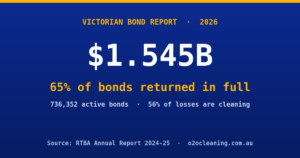
- 56% of bond deductions are cleaning-related (End of Lease Bond Disputes Report, 2025). Cleaning is the number one reason money is withheld.
- 65% of Victorian bonds are returned in full, while 35% of tenants lose some or all, and 10% lose the full amount (RTBA Annual Report, 2024–25).
- 95% of bond claims are settled by agreement, and only 5% go to VCAT (RTBA Annual Report, 2023–24). A clean handover with photos keeps you in that 95%.
A disputed bond can take a month or more to resolve. An agreed one clears in about a business day. The difference is almost always evidence and a clean that holds up to the checklist.
DIY or book a before-inspection clean?
You are legally allowed to clean to the “reasonably clean” standard yourself, and for a small, well-kept studio that is often fine. Where it gets risky is the oven, the tracks, multi-bathroom homes and carpet, the exact items that fail inspection. A DIY re-clean is roughly five times more likely than a professional one, and it usually means a second day off work at the worst possible time, mid-move.
That is why many Clayton tenants book a professional clean before the final inspection: the guarantee often works out cheaper than risking a deduction. Our end of lease cleaning in Clayton is fixed-price from $245, follows the agent’s checklist, and is backed by a 7-day bond-back guarantee. If the agent flags anything at the inspection, we come back within 7 days and re-clean it at no cost.
Clayton end of lease inspection FAQ
What do agents check first at a Clayton inspection?
The kitchen, and specifically the oven interior and rangehood filter, then the sliding door tracks and bathrooms. These are the items that fail most often. Agents compare each room to your entry condition report as they go.
Do I have to leave the property spotless?
No. The standard is “reasonably clean” for the property’s age and its move-in condition, not showroom-perfect. Fair wear and tear cannot be deducted from your bond.
Is carpet steam cleaning required in Clayton?
Only if your lease specifically requires it and that clause is valid, or if the carpet is dirtier than at move-in. Most carpeted Clayton units and houses benefit from a steam clean before inspection, and agents often ask for the receipt.
What happens if I fail the inspection?
A failed inspection is not an automatic bond loss. The agent lists the items, and you (or your cleaner) get a chance to fix them. With O2O, if an agent flags a cleaned area within 7 days, we return and re-clean it free.
Moving out in Clayton or around Monash? See fixed pricing and book your end of lease clean in Clayton, or read the full room-by-room vacate inspection guide for Melbourne.
{“@context”:”https://schema.org”,”@type”:”FAQPage”,”mainEntity”:[{“@type”:”Question”,”name”:”What do agents check first at a Clayton inspection?”,”acceptedAnswer”:{“@type”:”Answer”,”text”:”The kitchen, specifically the oven interior and rangehood filter, then the sliding door tracks and bathrooms. These fail most often. Agents compare each room to your entry condition report as they go.”}},{“@type”:”Question”,”name”:”Do I have to leave the property spotless?”,”acceptedAnswer”:{“@type”:”Answer”,”text”:”No. The standard is reasonably clean for the property’s age and move-in condition, not showroom-perfect. Fair wear and tear cannot be deducted from your bond.”}},{“@type”:”Question”,”name”:”Is carpet steam cleaning required in Clayton?”,”acceptedAnswer”:{“@type”:”Answer”,”text”:”Only if your lease specifically requires it and that clause is valid, or if the carpet is dirtier than at move-in. Most carpeted Clayton units and houses benefit from a steam clean before inspection, and agents often ask for the receipt.”}},{“@type”:”Question”,”name”:”What happens if I fail the inspection?”,”acceptedAnswer”:{“@type”:”Answer”,”text”:”A failed inspection is not an automatic bond loss. The agent lists the items and you or your cleaner get a chance to fix them. With O2O Cleaning, if an agent flags a cleaned area within 7 days, we return and re-clean it free.”}}]}