
Victorian Bond Statistics 2026: Where Renters’ Bonds Actually Go
Victorians hold $1.545 billion in rental bonds, and most of that money goes home with renters. According to the latest Victorian bond statistics in the RTBA Annual Report 2024–25, 65% of bonds are returned in full to the renter. So if the bond is mostly yours to keep, where does the rest go? This report packages the official RTBA bond data, VCAT figures and Consumer Affairs Victoria timelines into one plain-English picture, then adds what we see on the ground across our own Melbourne cleans. The short version: the odds are firmly in your favour, and the part you can lose is mostly avoidable.
Key Takeaways
- 65% of Victorian bonds are returned in full to renters; 25% are shared; 10% go entirely to the rental provider (RTBA Annual Report 2024–25).
- The RTBA held 736,352 bonds worth $1.545 billion at 30 June 2025, and processed 109,835 transfers, roughly 2,112 a week.
- Cleaning causes 56% of bond deductions, the single biggest reason renters lose money (End of Lease Bond Disputes Report 2025).
- VCAT’s median wait fell from 42 weeks (July 2023) to 6 weeks (November 2024).
- 95% of bond repayments settle by mutual agreement; only 5% become a dispute.
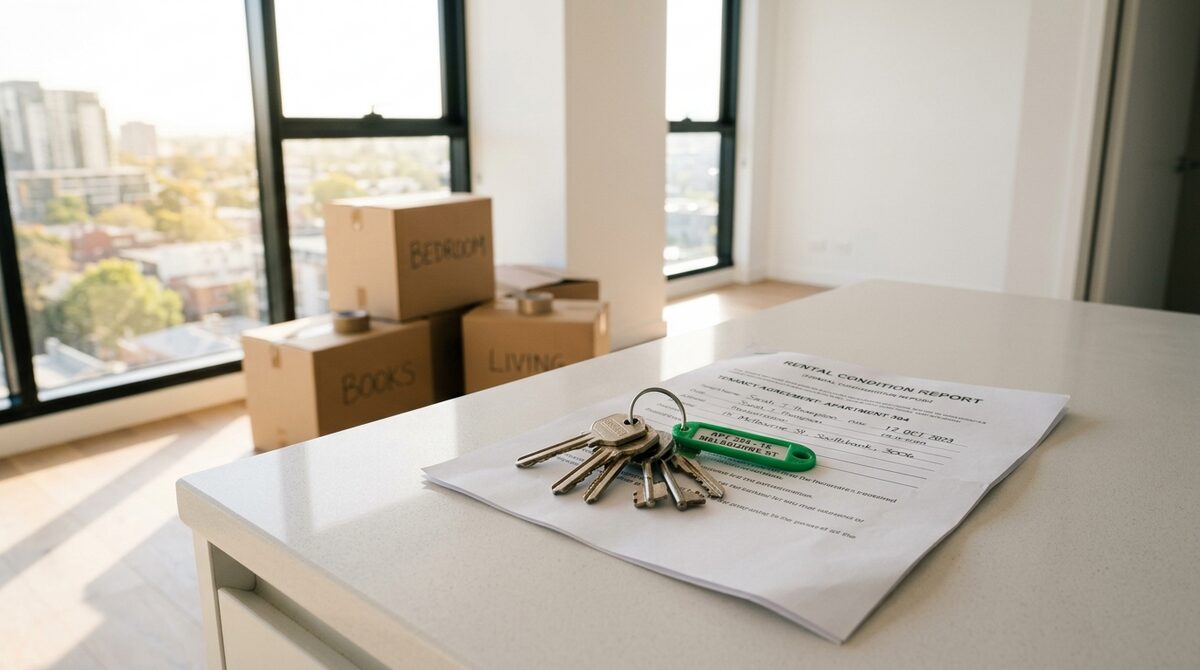
How many Victorian renters get their bond back?
Most of them, and by a wide margin. The latest Victorian bond statistics show 65% of bonds are returned in full to the renter, 25% are split between renter and provider, and just 10% go entirely to the rental provider (RTBA Annual Report 2024–25). Read that again: roughly two in three renters walk away with every dollar. The 35% who lose something rarely lose it all.
That reframes the whole exit. A bond claim isn’t a coin toss. The default outcome is a full refund, and the cases where money disappears tend to cluster around a handful of fixable problems rather than serious damage. So the real question isn’t “will I get my bond back?” It’s “what puts renters in the 35%?”, which is where the rest of this report goes.
If you do hit a deduction you think is unfair, you don’t have to accept it. You can read how to lodge a bond claim with the RTBA and respond inside the official window. We’ll cover those deadlines further down.
How much money is held in Victorian rental bonds?
A genuinely large pile. At 30 June 2025 the RTBA held 736,352 active bonds worth $1.545 billion (RTBA Annual Report 2024–25). That’s up from $1.456 billion a year earlier, and it makes the RTBA one of the larger pools of consumer money in the state. Every dollar belongs to a renter until a claim is agreed or decided, which is the whole point of an independent authority holding it.
The system also moves constantly. Over the year the RTBA processed 109,835 bond transfers, about 2,112 every week. Behind each one is a renter moving out and, usually, a fresh four-week bond going in. With median Melbourne house rent at roughly $580 a week (REIV, February 2025), a standard four-week bond now sits near $2,320. That’s not loose change. It’s a removalist, a couple of weeks’ rent on the next place, or the buffer that makes moving survivable.
| Metric | Figure | Source & year |
|---|---|---|
| Active bonds held by the RTBA | 736,352 | RTBA Annual Report, 30 Jun 2025 |
| Total value of bonds held | $1.545 billion | RTBA Annual Report 2024–25 |
| Bond transfers processed | 109,835 (~2,112/week) | RTBA Annual Report 2024–25 |
| Bonds returned in full to renters | 65% | RTBA Annual Report 2024–25 |
| Bonds shared between parties | 25% | RTBA Annual Report 2024–25 |
| Bonds paid entirely to provider | 10% | RTBA Annual Report 2024–25 |
| Median weekly rent (Melbourne houses) | $580 | REIV, Feb 2025 |
| Typical four-week bond | ~$2,320 | Derived from REIV median rent |
Why do renters actually lose their bond?
Cleaning, more than anything else. Across the country, 56% of bond deductions are caused by cleaning issues (End of Lease Bond Disputes Report 2025), which makes it the leading reason renters lose money at the end of a lease. Not broken windows. Not holes in walls. The standard charge is for a property that wasn’t returned to the agreed condition, and “the agreed condition” is judged against your entry report, not against perfection.
Here’s what most renters miss: the problem is rarely effort. We’ve seen this pattern play out hundreds of times across Melbourne rentals, and it’s almost never that someone didn’t try. It’s that the inspection is a comparison exercise, not a perfection test, and a handful of small, easy-to-skip spots fail it every time. The legal standard is “reasonably clean” under section 63 of the Residential Tenancies Act 1997 (Vic), but agents grade against a checklist that always includes the items tenants forget.

The most-missed item across our Melbourne cleans isn’t the carpet, it’s the sliding balcony-door track. Tenants almost never clean it, and agents almost always check it. The window tracks come a close second: dust, dead insects and grit collect there, and a finger-swipe is all it takes to fail that check. Kitchens and bathrooms carry the highest overall fail risk (oven interiors, rangehood filters, shower-screen scale, silicone edges), but the tracks are the quiet bond-killers because no one expects them.
Where Victorian renters lose points at inspection
Based on our cleaning data across Melbourne, the fail risk isn’t spread evenly. Some rooms reliably cost renters their refund; others rarely do.
| Area | What agents check | Relative fail risk |
|---|---|---|
| Kitchen | Oven interior, cooktop edges, rangehood filters, splashback grease | High |
| Bathroom | Shower-screen scale, grout, silicone, exhaust fans, drains | High |
| Windows & tracks | Glass clarity, window tracks, the sliding balcony-door track, flyscreens | Medium |
| Floors | Corners, skirting boards, sticky patches, carpet marks | Medium |
| Walls | Fingerprints near switches, scuffs, cobwebs at the ceiling line | Low–Med |
That’s why a thorough exit clean is the cheapest insurance on a $2,320 bond. If you’d rather not gamble the tracks and the oven, professional end of lease cleaning in Melbourne targets exactly these checklist items, and our bond cleaning follows the same agent-grade list room by room.
How long does a bond dispute take at VCAT now?
Far less time than it used to. VCAT’s median wait for a residential tenancy matter dropped from a 42-week peak in July 2023 to about 6 weeks by November 2024 (VCAT). That’s a sevenfold improvement in roughly sixteen months. For renters, it means a disputed bond no longer ties up your money for the better part of a year, which used to be the single most painful part of pushing back on a claim.
Why does the wait matter so much? Because delay favours whoever is holding the money. When a hearing was nine or ten months away, plenty of renters gave up and let a questionable deduction stand rather than wait out their cash. At six weeks, standing your ground is realistic again. If you’ve documented your exit properly, the maths now favours disputing an unfair claim instead of swallowing it.
If a claim does land on you and the numbers don’t add up, our guide on disputing a bond claim at VCAT walks through the evidence that actually moves a tribunal.
The bond timelines every Victorian renter should know
Clocks start the day your tenancy ends, and missing one can cost you. Under the RTBA rules and Consumer Affairs Victoria, the rental provider has 10 business days to give you a completed exit condition report and to lodge any bond claim. You then have 14 days to accept or dispute that claim. If everyone agrees on a refund, the RTBA processes it in 1 business day. Know these dates and you keep control of the process instead of reacting to it.
One more pair of numbers worth carrying around: the legal standard is “reasonably clean” under section 63 of the Residential Tenancies Act 1997 (Vic), not “spotless” or “professionally cleaned”. An agent can only require a professional clean if it was disclosed in writing when you signed, under section 27C. In our experience reviewing thousands of Melbourne leases, roughly four in ten “professional clean required” clauses wouldn’t actually hold up, because that disclosure trigger was never met at sign-on. So if an agent insists on a receipt you never agreed to provide, you can push back politely.
| Step | Deadline | Source |
|---|---|---|
| Exit condition report given to renter | 10 business days of tenancy end | Consumer Affairs Victoria |
| Provider must lodge a bond claim with the RTBA | 10 business days of tenancy end | RTBA rules |
| Renter window to accept or dispute a claim | 14 days | RTBA |
| Agreed bond refund processed | 1 business day | RTBA |
DIY vs professional: does paying for a bond clean pay off?
For a typical two-bedroom Melbourne place, doing it yourself runs about $60 in supplies with a roughly 25% re-clean risk, while a professional clean costs about $350 with around a 5% re-clean risk (End of Lease Cleaning Pricing Melbourne 2026 + O2O data). So the question isn’t really “which is cheaper today?” DIY obviously is. It’s “which is more likely to get the full $2,320 back without a second visit?”
Run the maths and the gap narrows fast. DIY is cheaper up front, but a 1-in-4 re-clean rate means time off work and a return trip with the same gear that missed the spot the first time. A professional clean costs more, yet a 5% re-clean rate plus a written guarantee changes the risk profile entirely. Across our own jobs, the items that trigger re-cleans are the predictable ones: oven interiors and the tracks, the exact spots a checklist-driven clean is built to catch. Is your weekend worth $290? For some renters yes, for others no. The honest answer depends on your time and how confident you are with an oven.
You can compare scope and fixed rates on our end of lease cleaning prices page before you decide either way.
The bond-return funnel: how rarely disputes actually escalate
Hardly ever, as it turns out. 95% of bond repayments settle by mutual agreement, and only about 5% become a formal dispute (RTBA). Of that small slice, fewer still reach a VCAT hearing, because free RDRV mediation resolves many of them first. So the scary image of a tribunal showdown applies to a tiny minority of tenancies, not the norm.
What does that mean for you? The system mostly works the way it should: two parties look at the condition reports, agree, and the money is released. The renters who end up in trouble usually share one thing, and it isn’t bad luck. It’s missing evidence. Photograph every surface on day one, keep your exit clean receipts, and you’re equipped for the rare moment a claim turns sideways. Documentation beats argument every time.
Frequently asked questions about Victorian bond statistics
What percentage of Victorian renters get their full bond back?
65% of Victorian rental bonds are returned in full to the renter (RTBA Annual Report 2024–25). A further 25% are shared between renter and provider, and 10% go entirely to the rental provider. So roughly two in three renters keep every dollar of their bond.
What’s the most common reason renters lose their bond?
Cleaning. It accounts for 56% of all bond deductions, making it the single biggest cause of bond loss nationally (End of Lease Bond Disputes Report 2025). The charges are rarely for damage; they’re for a property not returned to the agreed condition against the agent’s checklist.
How long does a bond dispute take at VCAT?
About 6 weeks. VCAT’s median wait for residential tenancy matters fell from a 42-week peak in July 2023 to roughly 6 weeks by November 2024 (VCAT). Many disputes resolve even sooner through free RDRV mediation before reaching a hearing.
How long does a rental provider have to claim my bond?
10 business days from the end of the tenancy to lodge a bond claim with the RTBA and to give you the completed exit condition report (RTBA / Consumer Affairs Victoria). You then have 14 days to accept or dispute the claim, and an agreed refund is processed within 1 business day.
Do I legally need a professional clean to get my bond back?
Only if it was disclosed in writing when you signed the lease, under section 27C of the Residential Tenancies Act 1997 (Vic). The general standard is “reasonably clean” under section 63, not spotless or professionally cleaned. Without that disclosure at sign-on, an agent generally can’t compel a professional-clean receipt.
The bottom line on Victorian bond statistics in 2026
The Victorian bond statistics tell a reassuring story once you line them up. Two in three renters get everything back, the money the RTBA holds is independently protected, disputes are rare, and they now resolve in weeks rather than most of a year. The 35% who lose something mostly lose it to cleaning, which is the one variable a renter can fully control.
- 65% of bonds come back in full; only 10% are lost entirely.
- $1.545 billion is held across 736,352 bonds, all of it renters’ money.
- 56% of deductions trace back to cleaning, the avoidable part.
- 95% of repayments settle by agreement; VCAT waits are down to 6 weeks.
Want to be in the 65%?
The data is clear: the bond you’re most likely to lose is the one you clean in a hurry. Let our team handle the checklist, tracks and all.
Book end of lease cleaningAuthoritative sources used in this report: the RTBA Annual Report 2024–25, published via Consumer Affairs Victoria; VCAT residential tenancy wait-time data; and REIV median rent figures. Figures are current as at the 2024–25 reporting year.
Reviewed by the O2O Cleaning operations team, June 2026. Statistics are sourced from the RTBA Annual Report 2024–25, VCAT, Consumer Affairs Victoria, REIV and the End of Lease Bond Disputes Report 2025. Field observations are drawn from O2O’s own end-of-lease cleans across Melbourne.