Preparing for a Glen Waverley end of lease inspection is easier when you separate three things: what needs cleaning, what your booking covers, and what evidence you should keep. A tidy room can still hide greasy filters, dusty cupboard shelves or debris inside sliding-door tracks. Equally, a worn surface is not necessarily a dirty one.
This guide helps you plan the clean, check the finished work and organise a clear handover. It is written for renters moving out of a Glen Waverley house, townhouse or apartment. For availability and a property-specific quote, see our end of lease cleaning service in Glen Waverley.
Quick answer: Start with your entry condition report, then inspect each room after furniture is removed. Confirm carpeted areas and optional tasks before booking. Keep clear photographs and allow time for drying and a final walkthrough. Consumer Affairs Victoria identifies reasonable cleanliness, with fair wear and tear allowed, as the relevant starting point.
What cleaning standard applies in Victoria?
The condition recorded when you moved in matters more than a generic promise of a spotless home. Consumer Affairs Victoria says renters must leave the property reasonably clean and in its original condition, allowing for fair wear and tear. Use the entry report to distinguish existing issues from changes during your tenancy. See Consumer Affairs Victoria’s condition report guidance.
Professional cleaning is not an automatic requirement for every rental. Tenants Victoria explains that agreements from 29 March 2021 can require professional cleaning, or cleaning to a professional standard, in specified circumstances. These relate to professional cleaning before the tenancy, disclosure to the renter, and the cleaning needed to restore the original condition. Check its moving-out guidance alongside your agreement if you are unsure.
For planning purposes, create two separate lists. Put grease, dust and removable residue on the cleaning list. Put damaged fittings, peeling finishes and unresolved maintenance issues on the discussion list. Photograph anything uncertain before attempting treatment. This keeps a cleaning booking focused on work that can realistically be completed.
Your Glen Waverley end of lease inspection checklist: room by room
Work through the home in a fixed order, checking both visible surfaces and concealed spaces. Start above eye level, move through cupboards and fixtures, and finish with floors. The checks below are a practical preparation guide, not a statement that every item is automatically included in every cleaning package.
Kitchen: check grease, appliances and edges
Begin with the cooking area. Look around hotplates, control knobs, splashbacks and the edge where the stovetop meets the bench. Remove loose crumbs before treating grease with a product suitable for the surface. Let appliances cool first, and follow their care instructions rather than using one strong chemical everywhere.

Open the oven and inspect the racks, trays, internal surfaces and accessible door glass. Check the rangehood underside and removable grease filters too. Oven work and filter cleaning should be named in the quote. Cleaning accessible components is different from dismantling an appliance or repairing a faulty extraction fan.
Finish with the sink, tap base, benchtops and the space around appliances. If a fridge or dishwasher is staying, confirm whether its interior is included. If you are taking appliances away, arrange safe removal before the clean so the newly exposed floor and surrounding surfaces can be reached.
Cupboards and drawers: inspect them open, not just closed
Empty cupboards completely before cleaning. A clean cabinet door does not tell you whether the shelf behind it is clean. Check drawer corners, shelf edges, handles and the cupboard under the sink. Small food spills and residue around rubbish storage deserve attention, even when the kitchen looks presentable from the doorway.
- Remove loose debris, old liners and personal belongings before wiping shelves.
- Clean handles, door edges and accessible hinge areas with a suitable cloth.
- Check under-sink storage for moisture or leaks that need reporting.
- Allow surfaces to dry before closing cupboards or putting anything back.
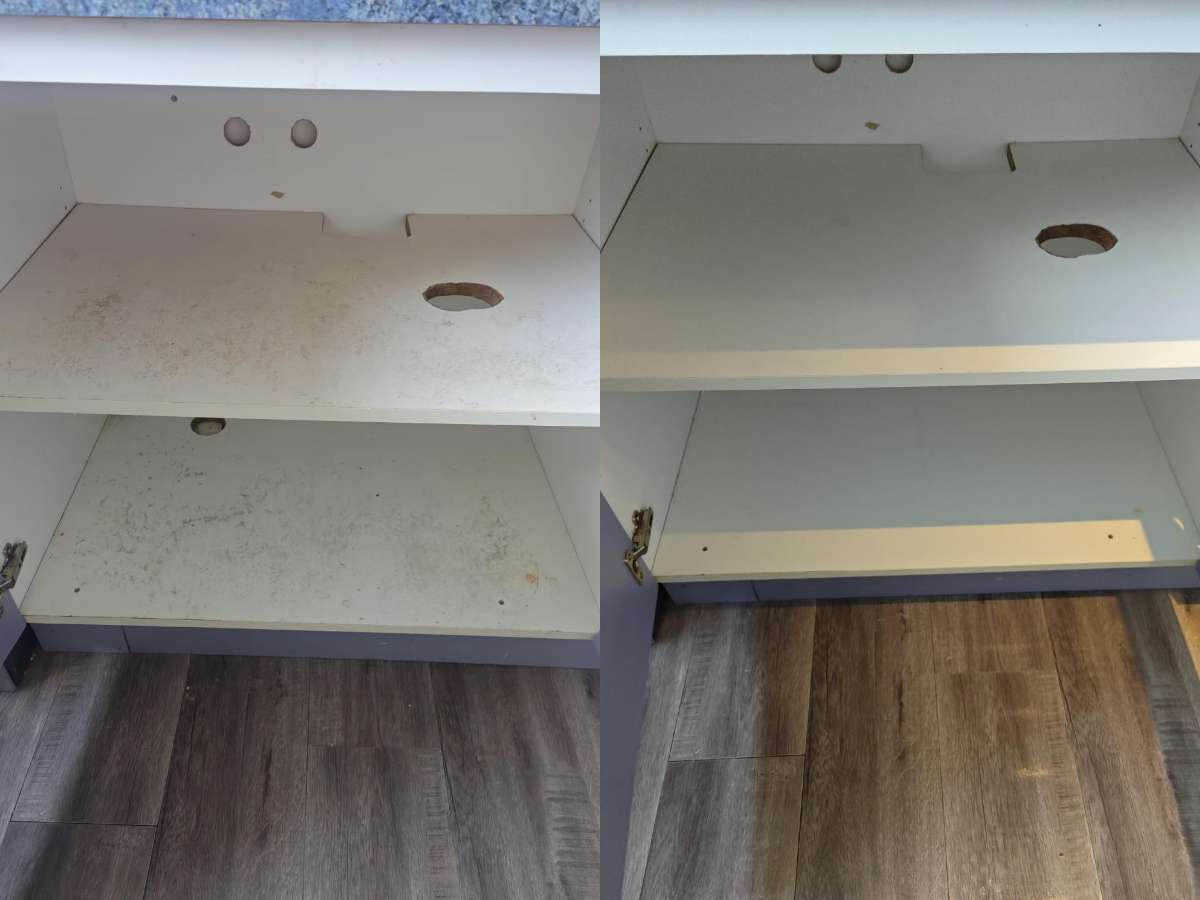
Use a light touch around raw edges and joins. Saturating cabinetry can introduce a new problem while trying to remove an old stain. If discolouration remains after a suitable cleaning method, record it and discuss it rather than continuing to scrub until the finish changes.
Bathrooms: separate removable residue from permanent damage
Inspect shower glass, tapware, tiles, the vanity, mirrors and the toilet, including accessible areas around its base. Check shower-door tracks and corners where residue collects. Use separate bathroom cloths, follow product labels and never mix cleaning chemicals. A strong smell is not proof that a surface is clean.
Soap residue may respond to cleaning; etched glass, damaged grout or deteriorated silicone may not. Report recurring damp or mould rather than assuming a surface treatment resolves its cause. Victoria’s rental minimum standards address mould and damp associated with the building structure. A cleaning visit is not a substitute for assessing that underlying problem.
Bedrooms and living areas: check after furniture leaves
Once beds, sofas and shelving have been removed, revisit the exposed edges. Dust behind furniture can be missed during ordinary weekly cleaning. Check wardrobe shelves, rails, skirting boards, door frames and accessible ledges. Vacuum carpet edges and clean hard floors using a method suited to the material.
Describe the layout accurately when booking. An open-plan kitchen, meals space and living room should be explained as connected areas. A separate downstairs lounge, study or retreat should also be identified. Send a floor plan if the room labels are confusing; do not assume a bedroom-and-bathroom count describes the entire cleaning scope.
Walls and switches: avoid turning a mark into paint damage
Look around switches, door handles and narrow walkways for fingerprints and scuffs. Wall spot cleaning is different from washing every wall. Before treatment, identify the finish and test an inconspicuous area. Stop if paint transfers or the sheen changes; repeated rubbing can leave a patch more noticeable than the original mark.

Keep moisture away from electrical fittings. Do not spray switches or sockets directly. If extensive wall washing is needed, send photographs and confirm the additional work before the visit. Paint repairs, patching holes and repainting should be discussed separately from routine cleaning.
Laundry, windows and sliding-door tracks
Check the laundry trough, taps, cupboards and the floor exposed after the washing machine is removed. Remove accessible lint and debris without dismantling fittings. If an appliance remains, clarify whether cleaning inside it is included. Avoid moving heavy equipment or disconnecting plumbing simply to reach an awkward corner.
For windows, look at the glass, sills, frames and accessible tracks. Remove dry debris before wiping tracks, then inspect the corners. Confirm whether the booking covers internal glass only or other accessible surfaces. Exterior windows, high glass, flyscreens and specialist access can require separate arrangements.
Check balcony doors in the same way, but treat the outdoor floor as a separate scope item. Vacuuming or sweeping followed by suitable mopping is not pressure washing. Do not assume a balcony, terrace, garage or storage cage is included merely because it belongs to the property.
Do you need carpet steam cleaning for the final inspection?
Decide on carpet cleaning from the tenancy requirements, the carpet’s condition and the areas actually needing treatment. It is not automatically required just because a tenancy is ending. Tenants Victoria explains the circumstances affecting professional cleaning obligations in its moving-out advice. Ask for clarification before treating a general request as a fixed legal requirement.
Keep the property size separate from the carpet quantity. A three-bedroom home may have only one carpeted bedroom. Conversely, a bedroom-only carpet package may not include a carpeted lounge, hallway or staircase. The written booking should name each area, not simply say “carpets included”.
| What to tell the cleaner | Why it changes the plan |
|---|---|
| Number of bedrooms with carpet | Prevents the property’s total bedroom count being mistaken for the cleaning quantity. |
| Separate lounge, hallway, landing or stairs | These areas need their own scope confirmation. |
| Floor level and lift access | Helps the team plan equipment access and setup. |
| Stains, odours and previous damage | Allows realistic discussion of treatment and its limitations. |
A small carpet job can still involve equipment setup and a minimum service charge. Ask for the confirmed total for your booking rather than assuming a one-bedroom rate applies to two bedrooms. For service information, see our carpet cleaning page.
Consider this hypothetical booking: a three-bedroom townhouse has carpet in one upstairs bedroom, hard flooring elsewhere, and a separate downstairs lounge. The cleaning enquiry should describe all three bedrooms and the lounge, but request carpet treatment for one bedroom only. The floor level still matters for bringing equipment inside.
Now add a carpeted staircase. That creates another carpet area to quote; it does not turn the booking into “two bedrooms”. Ask the team to reflect those distinctions in the written confirmation. This small check keeps the description, price and expected work aligned before anyone arrives.
Allow drying time before the walkthrough or key handover. There is no reliable universal drying promise: ventilation, weather, carpet construction and the treatment used all matter. Ask the technician when the carpet can be walked on and how to ventilate safely. Avoid booking movers to walk across freshly cleaned carpet.
How should you prepare a Glen Waverley property for cleaning?
Prepare the property around its actual layout and access arrangements, not the suburb name alone. An apartment may involve a building entrance and lift booking, while a townhouse may require equipment upstairs. Confirm these details before arrival so the team can spend its booked time cleaning rather than resolving access problems.
Confirm access, room layout and utilities
Send the address, property type, floor plan if useful, and the floor level of any carpeted room. Mention stairs, parking restrictions and the distance from parking to the entrance. If the building has a manager, check whether contractor access, lift protection or a permitted arrival window needs arranging.
Have belongings and rubbish removed before cleaning begins. Confirm whether the property will be empty and whether the fridge, washing machine or other appliances are staying. Keep water and electricity available for the agreed work. Share key or lockbox instructions privately, and confirm how the property should be secured afterwards.
Plan rubbish removal around Monash’s collection arrangements
For a Glen Waverley move later in 2026, do not assume the annual hard waste collection is still ahead. The City of Monash lists its 2026 annual collection window as 13 July to 4 September. It also offers additional paid collections. Check current eligibility and arrangements on the council’s hard waste collection page before relying on a pickup.
Apartment and multi-unit residents should check with their building manager or body corporate, because not every property is eligible for the annual service. Confirm what can be removed and when, rather than leaving furniture beside shared bins. Rubbish collection and an internal cleaning appointment are separate arrangements.
Make the removal date part of your cleaning plan. A mattress in a bedroom or boxes in a storage cage can prevent access even if the rest of the home is empty. Tell the cleaner about anything remaining so inaccessible areas can be discussed before work starts.
Identify filters and other easily overlooked fittings
Check whether the property has split-system air conditioners, a ducted return-air filter or both. These are different components, and neither should be assumed included without confirmation. Tell the team what is installed and whether it can be reached safely. Accessible filter cleaning is not the same as duct cleaning or mechanical servicing.

Do not wash a filter unless its manufacturer identifies it as washable. Some filters require replacement instead. Switch the unit off before handling user-serviceable parts and let washable filters dry fully before refitting. Leave unfamiliar, damaged or inaccessible components to an appropriate professional.
Describe the condition honestly
A room count cannot show grease buildup, heavy dust, pet hair or the condition behind furniture. Send recent photographs of the kitchen, bathrooms and any problem areas. Compare the home with our property condition guide, then ask the team to confirm the category and any extra work before proceeding.
Arrange cleaning after removalists and dusty trades have finished where possible. Leave a practical gap before handover for drying and your own check. If dates are tight, tell the cleaner the actual key-return deadline. An arrival time and a guaranteed completion time are not the same thing.
What should you check before returning the keys?
Walk through the finished property while you still have access, using the agreed scope as your checklist. Open cupboards, inspect corners and view surfaces from more than one angle. Take photographs after the final work is complete, and separate any cleaning concern from pre-existing wear or an unresolved repair.
Record each concern using four details: the location, what you can see, whether it was included, and the next action. For example: “Upstairs bedroom, dust on wardrobe shelf, internal shelves included, please recheck.” This is much easier to resolve than a message saying the whole property needs attention.

Take an overall photograph of each room and closer images of relevant details. Include clean appliance interiors, cupboard shelves and any area previously raised with the agent. Use clear lighting, keep the original files and avoid filters or edits that alter the appearance of surfaces.
- Check the booked rooms and extras against the written confirmation.
- Confirm treated carpets and wet floors are ready for safe access.
- Collect the cleaning invoice and any relevant carpet service record.
- Record unresolved items and send specific photographs promptly.
- Confirm the agreed key-return method and secure the property as instructed.
Your walkthrough with the cleaner is separate from the agent’s exit inspection. Consumer Affairs Victoria says the exit condition report must be completed within 10 days of the agreement ending, with the renter present or given a reasonable opportunity to attend. See its condition report guidance.
For a broader preparation sequence, our Melbourne final inspection checklist covers cleaning order and commonly overlooked areas. Use the Glen Waverley guide here for planning your property’s layout, equipment access, carpet scope and handover arrangements.
If later feedback concerns cleaning, send the written comments and photographs to your cleaner. Ask how the issue relates to the original scope and any applicable follow-up terms. A cleaning company can address its work; it cannot decide an agent’s assessment or guarantee the outcome of a bond dispute.
Glen Waverley final inspection FAQs
The most useful booking questions concern scope, timing and follow-up, rather than a promise that every property takes the same time. Use the answers below to prepare your enquiry. The final written quote should reflect the rooms, condition, access and optional work at your own property.
How much does end of lease cleaning cost in Glen Waverley?
The total depends on the property layout, condition and agreed extras, including any carpet treatment. Start with our end of lease cleaning price guide, then request a written quote for your property. Confirm inclusions and exclusions instead of applying a starting price to every room configuration.
When should I book cleaning before the inspection?
Book after your belongings and rubbish have been removed, with time remaining for drying and a walkthrough before handover. Ask the cleaner for a realistic duration once the scope is confirmed. If you have a fixed key-return deadline, provide it when booking rather than waiting until the cleaning day.
Are balconies and terraces included in the clean?
Do not assume they are included in an internal cleaning package. List each balcony or terrace and ask for the method and charge in writing. A vacuum or sweep and mop is different from pressure washing. Surface condition, drainage, access and building rules may also affect what can be done.
Does a one-bedroom carpet booking include the lounge and stairs?
No additional area should be assumed included unless it is listed in the booking. Tell the cleaner exactly which bedroom needs treatment and whether the lounge, hallway or stairs are carpeted too. Naming each area helps prevent a bedroom-only price being mistaken for a whole-property carpet service.
What if the agent raises a cleaning issue afterwards?
Send the cleaner the agent’s written feedback, clear photographs and the relevant room or surface. Keep the original booking confirmation available so the scope can be checked. Ask about the applicable follow-up process and access requirements. Do not arrange additional paid work on an assumed reimbursement without discussing it first.
Need help preparing for your final inspection?
For a Glen Waverley end of lease inspection, a clear plan is more useful than an oversized promise. Know the starting condition, identify every room and optional area, and check the finished work before handing over access. Keep your photographs and booking documents together so any later conversation is specific and straightforward.
This guide provides general cleaning information, not legal advice. Victorian tenancy guidance was checked on 7 September 2026. For a disagreement about obligations, consult Consumer Affairs Victoria, Tenants Victoria or a qualified adviser. Cleaning examples illustrate individual surfaces and do not guarantee identical results at another property.