
Table of Contents
Introduction
Thoroughly clean toilet bowl and all bathroom surfaces to improve your chances of passing the end of lease inspection. The toilet often receives the most scrutiny, yet many tenants overlook the deep cleaning steps needed to properly address buildup and odors.
Now you can avoid losing your entire bond just because there is a little stain or the toilet has a peculiar smell. Every other person has the exact apprehension, but don’t worry. This is your complete guide to removing stubborn stains, hard water marks, and preventing damage to toilet parts. No matter where you live—city centre or outskirts—these tough toilet bowl cleaning hacks will help you pass the inspection.

Reasons lease inspectors concentrate on toilet bowl hygiene.
Landlords and property managers care a lot about toilet hygiene. They pay special attention to the bowl, rim, and water level. Items such as rust toilet bowl stains, blue cleaner residue, lime scale, and unpleasant smells all indicate a lack of hygiene.
To get a great result, don’t just use a toilet brush. First, find the source of the stubborn stains. In this case, it’s poor water quality, biofilm, and internal seals.
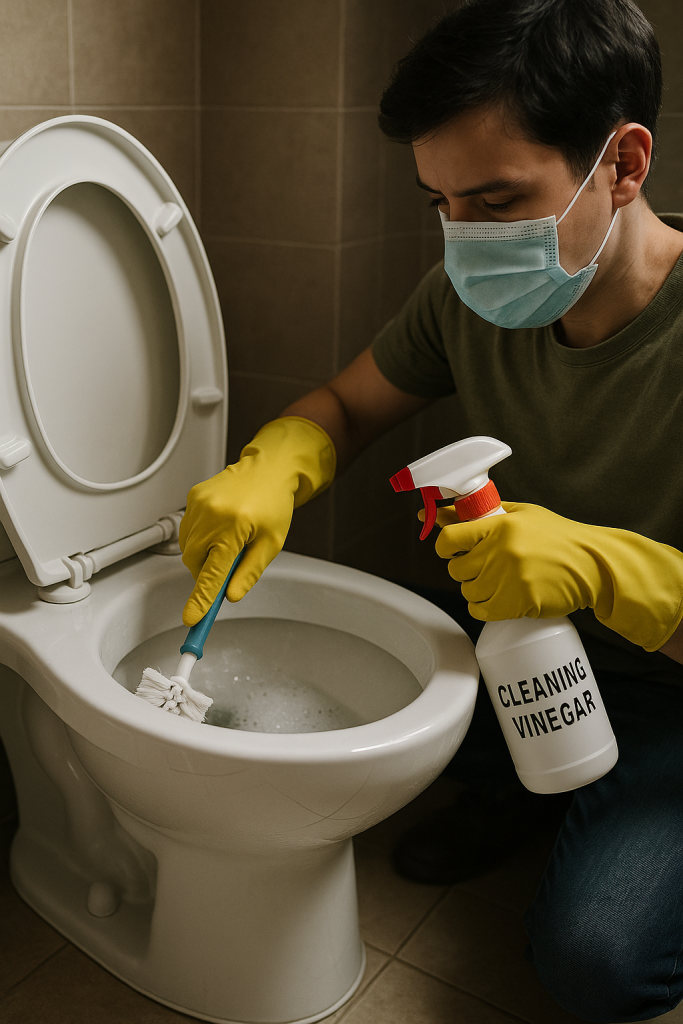
Recommended Materials for Safely Cleaning a Toilet Bowl
Before getting started, ensure you have the following items on hand:
• Cleaning vinegar or citric acid
• Toilet scrub brush and a scrubbing sponge
• Facemask and gloves
• Cleaning solution for toilet tank (no bleach)
• Spong and bucket
• Optional: CLR or IronOut for tough stains
Don’t use bleach or toilet cleaner tabs as they may damage internal components, resulting in loss of warranty.
Guide: Cleaning the Toilet Bowl for Final Inspection
1. Focus on the Symptoms: Stains, Odor, or Partial Flush.
Each symptom suggests a specific problem:
• Brown stains or hard water ring: Attempt to descale the toilet using vinegar or citric acid.
• Rust stains: Apply IronOut or Barkeeper’s Friend.
• Blue rings: Caused by bleach tablet residue. Needs a vinegar soak to clear.
2. Begin by soaking the toilet in vinegar.
Add 2 to 4 cups of vinegar to the toilet bowl and allow it to sit for a minimum of one hour (or longer for stubborn buildup). vinegar will aid in the removal of hard water stains and other mineral deposits.
3. Scrub the Bowl Thoroughly
Brush the toilet with a stiff bristled toilet brush. Focus on:
• The underside of the waterline
• The area beneath the rim
• The jet holes and siphon zone
Mix 1 cup of citric acid in warm water for stubborn stains and scrub again.
4. Clean the Toilet Tank (Optional but Recommended)
Keeping the tank clean prevents new stains which is the main reason for cleaning the toilet tank.
• Turn off the water and flush to empty.
• Add vinegar and let it soak.
• Scrub with a brush (no bleach!).
• Wipe internal parts to prevent flapper seal damage.
For the full guide on toilet cleaning for end of lease, check how-to-clean-toilet-for-end-of-lease-cleaning.
5. Rinse and Check for Odour
Post cleaning the toilet, flush multiple times. If bad smell persists, investigate:
• Toilet trap and vent plumbing
• Incoming water and toilet bowl water
• Biofilm under rim
If natural remedies do not work, try enzyme cleaners.
Best Solutions For Troublesome Toilet
Stubborn toilet problems can be resolved by the expert tips below:
• Poopy limescale: apply a pumice stone with care below waterline.
• Blue cleaner ring: soak in vinegar, brush off.
• Extremely hard water build up: use CLR or contact a professional, O2O Cleaning.
Be careful with strong cleaners. They may damage the glaze or other parts, especially in older rented toilets.
Should You Hire a Professional?
For those with a particularly tight timeline, booking an end-of-lease cleaning might be a good idea. Professionals have access to:
• Steam cleaners
• Adg
For reliable assistance, visit Bond Cleaning services from O2OCleaning.
FAQs
How often should I clean the toilet tank?
For most people, 1-2 times annually is best. As for a lease inspection, it is best to do it a week prior to moving out.
What is the most effective way to get rid of the brown stains on the toilet?
Vinegar or citric acid will be effective. For rust or deep stains, IronOut or other professional grade cleaners work well.
How do I remove stubborn stains without damaging the toilet?
Avoid bleach and toilet cleaning tabs. Also, do not use wire or steel wool brushes. Always shut the water off when cleaning the tank.
Is it necessary to clean the tank?
It depends. If stagnant water is the issue, cleaning the toilet tank will usually improve the situation. Maintaining the toilet’s flush capabilities and the overall aesthetics will improve.
Conclusion
We know that finding a dirty toilet during an inspection can make you anxious. You might worry about losing part of your deposit. Luckily, with the right tools, anyone can clean a toilet without needing to open internal parts—or run the risk of leaks. Just in case you don’t have enough time on your hands, qualified local services such as O2Ocleaning are always available.
Always bear in mind that maintaining a property is not just about wiping stains. Looking after a property means keeping everything in good shape. This includes the toilet, which helps you meet your responsibilities as a tenant.
For more help in the same end of lease cleaning topic, see What is O2OCleaning? Melbourne’s Trusted End of Lease Cleaning Experts and How to Remove Mold from Ceiling for End of Lease Cleaning Success.
For more help in the same end of lease cleaning topic, see How to Clean Surface areas Properly for End of Lease Cleaning and How to Clean a Stained Toilet Bowl for a Successful Move-Out Inspection.


