By the O2O Cleaning team: police-checked, fully insured cleaners with 5+ years and 300+ clients across Melbourne.
Australians spend up to 90% of their time indoors (State of Indoor Air in Australia 2025, QUT THRIVE). That’s a lot of hours breathing the air around your oven, your grout, your carpet and the dust behind the fridge. A weekly clean keeps the surface tidy. It doesn’t touch the build-up underneath.
That build-up is exactly what a deep cleaning service is for. This guide explains what a professional deep clean actually includes, room by room, how it differs from a regular or bond clean, and when you genuinely need one. Prices in Melbourne start from $219, fixed per job, so you’ll know the full cost before you book.
Key Takeaways
- A deep cleaning service is a one-off, top-to-bottom reset that reaches the grime a regular clean skips: inside the oven, grout lines, behind appliances, skirting boards and tracks.
- In Melbourne, deep cleaning services run from $219 (1 bed) to about $509 (5 bed), fixed per property, not per hour.
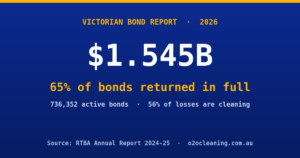
- It isn’t a bond clean. Cleaning causes 56% of bond deductions (End of Lease Bond Disputes Report, 2025), so if you’re moving out you need an end of lease clean instead.
- Book one when you move in, after a renovation, before a sale, each spring, or when dust and allergens start building up.
What is a deep cleaning service?
A deep cleaning service is a thorough, one-off clean that resets a whole home from top to bottom. It targets the built-up grime a routine clean never reaches: inside the oven, shower grout, behind and under appliances, skirting boards, light fittings and window tracks. That hidden build-up is easy to underestimate: Australia’s first national indoor-air report reviewed 106 studies across more than 2,500 buildings and found indoor air quality still isn’t properly addressed (State of Indoor Air in Australia 2025). House, home and apartment deep cleaning services all describe the same job at different property sizes.
Think of it as the difference between wiping a benchtop and clearing everything off, degreasing the splashback, and scrubbing the grout behind it. A regular clean maintains. A deep clean restores. Most Melbourne homes need one when they haven’t had a proper reset in six months or more.
Here’s what most people miss: a home can look tidy and still be overdue for a deep clean. The dust on top wipes off in seconds. The grease film on the rangehood, the soap scum welded to the shower screen, the grit packed into a sliding door track, that’s the part a deep cleaning service is built to remove.
A professional deep clean of a standard Melbourne home takes around three to five hours with a small team, depending on size and condition. You can read the full scope on our deep cleaning Melbourne page.
What’s included in a deep clean, room by room?
A deep clean covers every room, but the work concentrates where grime builds up fastest: the kitchen and bathroom. Across our cleans, these two rooms hold the most stubborn, time-consuming build-up, and they’re the first places a fresh pair of eyes will notice. So what are you actually paying for? Here’s the room-by-room scope.
Kitchen deep clean
The kitchen is the hardest-working room in any deep clean. We degrease the inside of the oven, the racks and the glass door, clear the rangehood filter, scrub the splashback, wipe down cupboard fronts inside and out, and clean behind the kettle and toaster where crumbs and grease gather.
Our finding: the oven interior alone is the single biggest reason a kitchen gets flagged in the majority of cases we see. It’s also the job people most want to skip. A proper degrease takes time and the right product, which is why it’s core to any deep cleaning service rather than a weekly task.
For the method behind a few of these jobs, see our guide on how to clean kitchen appliances.

Bathroom deep clean
A bathroom deep clean attacks scale and soap scum. We clear shower-screen build-up, scrub grout lines, treat silicone edges, clean exhaust fans, descale taps and clear the drains. Melbourne’s tap water runs 50 to 100 mg/L in hardness depending on suburb (water-quality data), which is why limescale and shower film return faster here than people expect.
One honest limit worth knowing: if mould has gone black inside the silicone sealant, no amount of scrubbing removes it. That’s a sealant replacement and, in a rental, usually a building issue rather than your fault. A good cleaner tells you the difference instead of charging to scrub something that can’t be saved. If your shower drain smells, our guide on mould in the shower drain walks through the fix.

Living areas, bedrooms and the spots people forget
Beyond the wet rooms, a deep clean covers skirting boards, light fittings, switches, door frames, cobwebs at the ceiling line, and the inside of windows. We also vacuum upholstery and edges where dust collects.
Our finding: across thousands of Melbourne cleans, the most-missed item is the window track, closely followed by the sliding balcony-door track. Dust, grit and dead insects pack in there, and one finger-swipe shows it. Tenants almost never clean it. Inspectors almost always check it.
There’s a method to all of it. We work the Dry-First, Wet-Last Rule: dust and vacuum before anything wet touches a surface. Dust settles downward and moisture spreads outward, so cleaning in the wrong order means redoing floors you already finished. Sequence beats scrubbing harder, every time.
Deep clean vs regular clean vs spring clean vs bond clean
The four sound similar and cost very differently, so it’s worth drawing the line. A regular clean maintains a tidy home. A deep clean resets it. A spring clean is simply a deep clean booked seasonally. A bond clean (end of lease clean) is a deep clean measured against a real estate agent’s checklist to get your bond back. Picking the wrong one means you either overpay or fall short.
| Service | What it’s for | Best when |
|---|---|---|
| Regular clean | Weekly or fortnightly upkeep of an already-clean home | Ongoing maintenance |
| Deep clean | One-off, top-to-bottom reset of built-up grime | No reset in 6+ months |
| Spring clean | A deep clean, booked seasonally | Once or twice a year |
| Bond / end of lease clean | Deep clean to pass an agent’s exit inspection | Moving out, chasing a bond |
The distinction that costs people money is deep clean versus bond clean. Cleaning is the leading cause of bond deductions in Australia, behind 56% of them (End of Lease Bond Disputes Report, 2025). A standard deep clean is thorough, but it isn’t checked against an agent’s exit criteria and it doesn’t come with a bond-back guarantee. If you’re moving, book the end of lease clean.
For ongoing upkeep instead, compare a regular house clean, or read our weekly cleaning routine to stretch the time between deep cleans. For a full side-by-side, see deep cleaning vs regular cleaning.
When do you actually need a deep clean?
You need a deep clean when build-up has outpaced your weekly routine, or before a moment that demands a higher standard. Because Australians spend up to 90% of their time indoors (State of Indoor Air in Australia 2025), the dust, grease and allergens at home matter more than most people assume. Five moments are worth booking for.
- Moving into a new place. A move-in deep clean resets a home before your furniture lands, while every surface is still reachable.
- After a renovation or build. Fine dust from sanding and cutting settles into every track and vent. A post-renovation deep clean clears what a vacuum can’t.
- Before a sale or inspection. A spotless home photographs better and shows better.
- Each spring. A seasonal deep spring clean keeps the build-up from compounding year on year.
- When allergens build up. Dust mites are very common and live in every home, concentrating in mattresses, bedding, carpet and upholstered furniture (Healthdirect Australia, 2025). A deep clean, including a mattress and upholstery service, lowers that load.
In our cleans, the move-in case is the most common. New tenants take the keys, find the previous “clean” never touched the oven or the bathroom silicone, and want it reset before the furniture lands. A deep clean handles exactly that, while the place is still empty and every surface is reachable.

How much do deep cleaning services cost in Melbourne?
Deep cleaning services in Melbourne cost $219 to about $509, fixed by the number of bedrooms and bathrooms. The price is set per property, not per hour, so there are no clock-watching surprises and you approve the full figure before anyone starts. A one-bedroom home starts at $219. A large five-bedroom house sits near $509.
What pushes the price is simple: more bedrooms and bathrooms mean more work, and a home that hasn’t been deep cleaned in a long time takes longer. Add-ons like inside-fridge or extra rooms adjust the total. For the full per-size table and what drives each quote, see our deep cleaning cost guide.
Why fixed-price rather than hourly? Because an hourly rate punishes a dirtier home and rewards a slow clean. A flat rate means the messier the job, the better your value, and you’re never watching the clock.
Why choose O2O for deep cleaning services?
O2O Cleaning holds a 4.9-star rating across 300+ clients and more than five years cleaning Melbourne homes. Every deep clean is fixed-price and fully insured, with the price confirmed in writing before we start. That combination, real volume plus a written fixed price, is what separates a professional service from a one-off gig.
We also tell you the truth about what a clean can and can’t fix. If mould is set inside the silicone or a surface is worn rather than dirty, we’ll say so rather than charge to scrub the unscrubbable. That’s the same plain transparency we bring to every quote: one clear figure, no pressure, genuine thanks for the work.

Police-checked, fully insured cleaners · 4.9★ from 300+ Melbourne clients · fixed price by property size.
Frequently asked questions
What’s included in a deep cleaning service?
A deep clean covers what a regular clean skips: inside the oven, rangehood filter, shower grout and silicone, descaled taps, skirting boards, light fittings, window tracks and behind appliances. In our cleans, the oven interior and window tracks are the two spots that get missed most, so they’re core to the job, not optional extras.
How much does a deep cleaning service cost in Melbourne?
Deep cleaning services in Melbourne cost from $219 for a one-bedroom home to about $509 for a five-bedroom house. Pricing is fixed per property, not hourly, so you approve the full amount before booking. Bedroom and bathroom count and time since the last deep clean are the main price drivers.
How long does a deep clean take?
A professional deep clean of a standard Melbourne home takes about three to five hours with a small team, depending on size and condition. A one-bedroom apartment can finish in two to three hours. A larger four or five-bedroom house, or a home that’s overdue, takes most of a day.
Is a deep clean the same as an end of lease clean?
No. A deep clean is thorough but isn’t measured against an agent’s exit checklist, and it doesn’t carry a bond-back guarantee. Since cleaning causes 56% of bond deductions (End of Lease Bond Disputes Report, 2025), tenants moving out should book an end of lease clean instead.
How often should you book a deep clean?
Most Melbourne homes benefit from a deep clean every three to six months, with regular upkeep in between. Book more often if you have pets, allergies, or a busy household. Dust mites live in every home and concentrate in bedding and carpet (Healthdirect Australia, 2025), so a quarterly reset keeps the allergen load down. For the full room-by-room schedule, see how often to deep clean your house.
The bottom line
A deep cleaning service is the reset your weekly routine can’t deliver: the oven, the grout, the tracks, the build-up you stop noticing until it’s gone. In Melbourne it runs from $219, fixed-price, with no hourly surprises. Book one when you move in, renovate, sell, or simply haven’t had a proper reset in months.
Ready to see the full scope and lock in a fixed quote? Start on our deep cleaning Melbourne page, check the full price breakdown, or if you’re moving out, compare end of lease cleaning prices instead.