
The Short Answer: How to Get Stains Out of Carpet
Blot immediately, use cold water, and match your solution to the stain type. That’s the core method. The tricky part is knowing which solution works on which stain — and acting before the 24-hour mark. The Carpet and Rug Institute defines the difference between a removable “spot” and a permanent “stain” as roughly 24 hours: after that, stain molecules chemically bond to carpet fibers and become far harder to lift. And with cleaning the leading cause of bond deductions in Victoria — carpet damage among the top items disputed at VCAT — acting early isn’t just about aesthetics, it’s about protecting your bond.
- Blot (never rub) and treat within 24 hours — after that, stains bond chemically to fibers and become significantly harder to remove (Carpet and Rug Institute).
- Cleaning failures — including carpet stains — are the top reason renters lose their bond in Victoria (Consumer Affairs Victoria).
- Different stains need different solutions: enzyme cleaners for pet urine, cold salt water for blood, cornstarch for grease, rubbing alcohol for ink.
- Never mix hydrogen peroxide and vinegar, and never add baking soda to a carpet cleaning machine tank — both can cause damage or safety hazards.
- If DIY methods fail before your end-of-lease inspection, professional steam cleaning is the most reliable fallback.

Quick Reference: Carpet Stain Removal by Stain Type
Before diving into step-by-step methods, here’s a fast-lookup table covering the 8 most common carpet stains. Match your stain, grab the right ingredients, and you’ll have a much better chance of a clean result.
| Stain Type | Best First Response | Key Solution | Treat Within | DIY Difficulty |
|---|---|---|---|---|
| Coffee | Blot with cold water | White vinegar + baking soda | 30 minutes | Easy |
| Red wine | Blot, then soda water | Hydrogen peroxide + dish soap | 1 hour | Moderate |
| Pet urine | Blot thoroughly | Enzyme-based cleaner | As soon as possible | Moderate |
| Blood | Cold water only (never warm) | Cold salt water or hydrogen peroxide | 15 minutes | Easy |
| Mud / dirt | Let it dry completely first | Brush off + dish soap + water | After drying | Easy |
| Grease / oil | Sprinkle cornstarch or baking soda | Dish soap + warm water | 30 minutes | Easy |
| Ink / marker | Blot, don’t spread | Rubbing alcohol (isopropyl) | 1 hour | Hard |
| Candle wax | Let it harden, then scrape | Ice + blunt scraper + iron + cloth | After hardening | Moderate |
The Golden Rules Before You Touch Any Stain
These four rules apply to every stain type without exception. Get these wrong and even the right cleaning solution won’t help much.
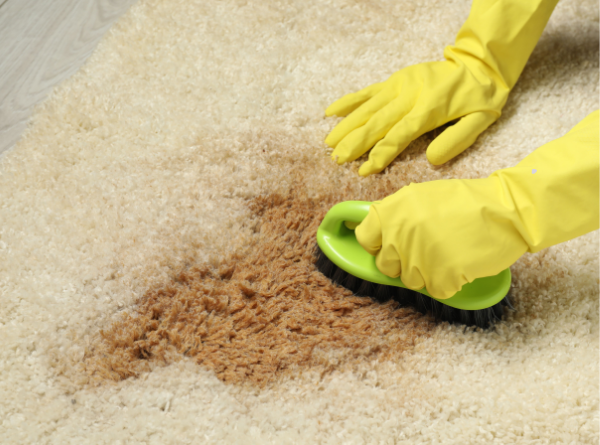
Blotting vs. rubbing: According to the Carpet and Rug Institute, blotting uses the wicking action of liquid to lift stain molecules out of fibers. Rubbing does the opposite — it pushes stain deeper, damages fiber structure, and creates the “fuzzy” worn patches that landlords flag at inspection.
- Always blot, never rub. Use a clean white cloth and press firmly from the outer edge of the stain inward. Work toward the center to avoid spreading.
- Cold water first. Hot water sets protein-based stains (blood, egg, dairy) permanently. Always start cold, even if the stain smells bad.
- Test every solution in a hidden spot. Apply to a small area behind furniture or inside a wardrobe. Wait 10 minutes, blot, and check for colour transfer before treating the visible stain.
- Don’t oversaturate. Too much liquid soaks through to the carpet backing and underlay — this causes mould and a “musty” smell that’s harder to remove than the original stain. Use a light hand.
Natural DIY Carpet Cleaning Solutions That Actually Work
You don’t need expensive commercial products for most fresh stains. CHOICE Australia’s lab testing of 21 carpet stain removers found that a simple homemade mixture performed better than several commercial products — and cost a fraction of the price. Here are the recipes worth knowing:
| Recipe | Ingredients | Best For | Important Notes |
|---|---|---|---|
| Vinegar + baking soda | Equal parts white vinegar + water, then baking soda sprinkle | Coffee, tea, general deodorising | Apply vinegar solution first, THEN baking soda. Never mix them together in a bottle — CO₂ pressure builds up. |
| Hydrogen peroxide + dish soap | 1 cup 3% H₂O₂ + 1 tbsp dish soap | Red wine, old stains, food spills | Test first — can lighten dark carpets. Don’t use above 3% concentration. |
| Enzyme-based cleaner | Nature’s Miracle, Biozet Attack, or similar | Pet urine, faeces, vomit | Must stay wet on the stain for 10–15 minutes. The live bacteria cultures need time to break down uric acid. |
| Cold salt water | 1 tsp salt dissolved in 1 cup cold water | Fresh blood stains | Never warm or hot — heat permanently sets blood proteins into fibers. |
| Rubbing alcohol (isopropyl) | 70% isopropyl alcohol, applied with cotton ball | Ink, marker, nail polish | Work from outside the stain inward. Change cotton balls frequently to avoid re-depositing ink. |


Step-by-Step Guide for 8 Common Carpet Stains
1. Coffee Stains
Coffee is tannin-based, which means it bonds to fibres quickly but responds well to mild acid (vinegar). Act within 30 minutes for best results.
- Blot up as much liquid as possible with a clean cloth or paper towels.
- Mix 1 tablespoon white vinegar + 1 tablespoon dish soap + 2 cups cold water.
- Apply the solution to the stain using a clean cloth. Blot, don’t rub.
- Sprinkle a thin layer of baking soda over the damp area. Let it sit 15–20 minutes.
- Vacuum up the baking soda once dry. Repeat if needed.
For old, dried coffee stains: Rehydrate the stain first with cold water, let it soak for 5 minutes, then follow steps 2–5 above. Old coffee may need two or three treatments.
2. Red Wine Stains
Red wine contains chromogens and tannins that stain fast. Your first 10 minutes are critical. Don’t reach for salt — it can set the stain on synthetic fibres.
- Blot up as much wine as possible immediately.
- Pour a small amount of soda water or cold water directly on the stain to dilute it. Blot again.
- Mix 1 cup 3% hydrogen peroxide + 1 tablespoon dish soap.
- Apply to the stain, let sit 5–10 minutes, then blot from outside inward.
- Rinse with cold water and blot dry.
Test first on light-coloured or wool carpets — hydrogen peroxide can cause minor lightening on some fibres.
3. Pet Urine and Odour
Pet urine is the hardest stain to fully eliminate because it contains uric acid — a compound that isn’t water soluble and that standard cleaners can’t break down. Research confirms that only enzyme-based cleaners can fully neutralise uric acid; regular cleaners mask the smell temporarily, but the odour returns as the carpet dries.

- If fresh: blot up as much urine as possible with old towels. Press firmly — don’t dab lightly.
- Apply an enzyme-based cleaner (Nature’s Miracle, Biozet Attack, Urine Off). Saturate the area well — the cleaner needs to reach the same depth the urine reached.
- Leave wet for a minimum of 10–15 minutes. The live bacterial cultures need contact time to digest uric acid.
- Blot dry. Do not rinse — rinsing removes the active bacteria before they finish working.
- Let the area dry completely. Old fans or open windows speed this up. Avoid walking on it while wet.
For dried or old pet stains: Use a UV blacklight (available at hardware stores for under $20) to locate all hidden urine spots — dried urine fluoresces under UV. Rehydrate the area first with warm water, then apply enzyme cleaner and leave for up to 1 hour.
4. Blood Stains
Blood is a protein-based stain. The single most important rule: never use warm or hot water. Heat denatures the proteins and permanently bonds them to carpet fibres — it’ll set the stain instead of lifting it.
- Blot fresh blood with a cold, damp cloth. Work from the outside in.
- Mix 1 teaspoon salt in 1 cup cold water. Apply to the stain and blot.
- If the stain persists, apply a small amount of 3% hydrogen peroxide directly. It will fizz — this is the oxidation reaction lifting the blood proteins. Blot immediately.
- Rinse with cold water and blot dry.
5. Mud and Dirt Stains
This is the one time you don’t act immediately. Wet mud spreads. Wait for it to dry completely, then follow these steps:
- Once fully dry, use a stiff brush or the edge of a spoon to break up and scrape off as much dried mud as possible.
- Vacuum thoroughly to remove all loose particles.
- Mix 1 tablespoon dish soap with 2 cups warm water. Apply to the remaining stain and blot.
- Rinse with cold water and blot dry. Repeat if a shadow remains.
6. Grease and Oil Stains
Grease from food, cooking oil, or mechanical oil needs an absorbent first, then a degreaser. Don’t add water at the start — it’ll spread the oil further.
- Sprinkle cornstarch or baking soda generously over the grease. Leave for 15–30 minutes to absorb the oil.
- Vacuum up the powder.
- Apply a small amount of dish soap (its degreasing surfactants break down oil) directly to the stain.
- Work in with a damp cloth using a gentle blotting motion. Add a small amount of warm water and continue blotting.
- Rinse, blot dry, and allow to air dry completely.
7. Ink and Permanent Marker
Ink stains are among the hardest to remove. Speed matters less here than technique — using the wrong solvent can spread the dye further across the fibres.
- Dab (don’t rub) 70% isopropyl rubbing alcohol onto a clean cotton ball.
- Press the cotton ball onto the stain. The alcohol dissolves the ink dye. Change cotton balls frequently — you’re lifting ink, not spreading it.
- Work strictly from the outer edge inward.
- Once the ink is lifted, rinse the area with cold water and blot dry.
- For stubborn permanent marker: follow up with a mix of 1 cup hydrogen peroxide + 1 tablespoon dish soap, applied and blotted after 5 minutes.
8. Candle Wax
Wax hardens as it cools, which is your advantage. Trying to remove it while liquid just pushes it deeper into fibres.
- Let the wax harden completely. Speed this up by placing a bag of ice over it for a few minutes.
- Once hard, use a blunt knife or spoon to scrape off as much wax as possible.
- Place a paper bag or several layers of paper towel over the remaining wax residue.
- Run a warm iron (low heat, no steam) over the paper. The heat melts the wax into the paper — not back into the carpet. Move the paper frequently to a clean section.
- Any remaining colour residue (from coloured candles) can be treated with rubbing alcohol.

What Never to Mix — Carpet Cleaning Safety
Some DIY combinations people try are not just ineffective — they’re genuinely dangerous or will permanently damage your carpet. This table covers the combinations to avoid:
| Don’t Mix | Why | What Happens |
|---|---|---|
| Hydrogen peroxide + vinegar | Chemical reaction | Forms peracetic acid — corrosive, irritates lungs and skin, and can damage carpet backing. |
| Bleach + vinegar (or any acid) | Toxic gas | Produces chlorine gas. Even small amounts cause coughing, eye irritation, and respiratory issues. |
| Bleach + ammonia | Extremely toxic | Produces chloramine vapour. This is a serious health hazard — never do this indoors. |
| Baking soda in a machine’s water tank | Equipment damage | When mixed with any liquid in a closed system, CO₂ gas builds up and can burst seals, clog spray nozzles, and void warranties. |
| Bleach on wool or coloured carpet | Permanent damage | Bleach destroys wool protein structure and strips colour from synthetic fibres. The result is a permanent bleached patch — often worse than the original stain. |
Which Commercial Products Work Best in Australia?
When DIY solutions aren’t cutting it, these commercially available products are worth reaching for. Based on CHOICE Australia’s independent testing of 21 carpet stain removers, a few products consistently outperform the rest across multiple stain types:
- Peerless Jal Carpet Spotter and Deodoriser — CHOICE’s top performer across red wine, coffee, sauce, and oil/dirt stains. Widely available at supermarkets and hardware stores.
- Resolve Carpet Stain Remover — Reliable all-rounder for general stains. Available at most major supermarkets.
- Biozet Attack (enzyme formula) — Best for biological stains (pet urine, vomit, blood). The enzyme formula requires dwell time but works on stains that regular products miss.
- The Pink Stuff Paste — Effective on grease and drink spills. Use sparingly and rinse well to avoid residue build-up.
One important note: always follow the label for dwell time. Most products need 3–5 minutes of contact time before blotting. Rushing this step is the most common reason commercial products “don’t work.”
When Should You Call a Professional Carpet Cleaner?
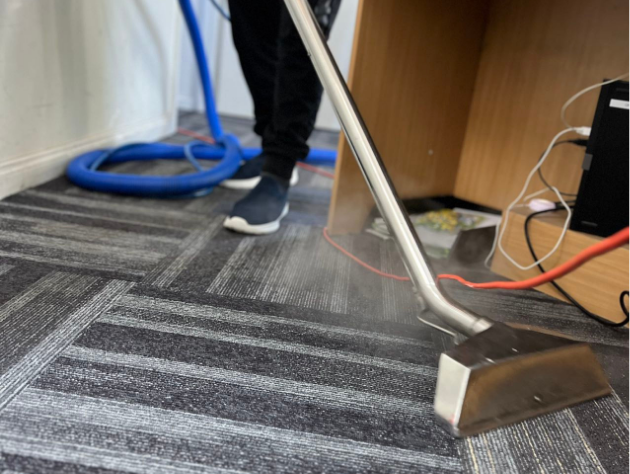
DIY methods handle most fresh stains well. But there are situations where professional equipment — particularly truck-mounted hot-water extraction units that heat water to 90°C+ — will outperform anything you can do at home. According to Tenants Victoria, cleaning disputes are the most common cause of bond deductions. Calling in a professional before your final inspection — not after — gives you a documented cleaning record to dispute any unfair deduction claims.
Call a professional when:
- You’ve treated a stain twice with the right method and it’s still visible
- The stain covers a large area or multiple sections of carpet
- There’s a persistent odour (especially pet-related) that survives DIY enzyme treatment
- You’re within 7 days of an end-of-lease inspection
- The carpet is delicate (wool, silk, or hand-woven) — these need specialist care
O2OCleaning provides professional carpet cleaning in Melbourne with guaranteed results. If stains return after treatment, we’ll come back at no extra charge. For renters, we also offer end-of-lease cleaning packages that include carpet steam cleaning as part of a complete bond-back service.
Frequently Asked Questions
What is the best homemade solution to get stains out of carpet?
For most common stains (coffee, food, general spills), a mix of 1 tablespoon white vinegar + 1 tablespoon dish soap + 2 cups cold water is the most versatile homemade solution. For protein-based stains (blood, pet urine), use cold salt water or an enzyme cleaner instead. CHOICE Australia found that homemade recipes outperform several commercial products in side-by-side testing.
Can you remove old, dried carpet stains that have been there for months?
Yes, in most cases — though success depends on stain type, carpet material, and whether incorrect products were used previously. Fresh stains are far easier to remove: the Carpet and Rug Institute defines the 24-hour mark as the threshold between a removable “spot” and a set-in “stain.” For old stains, rehydrate first with cold water, then apply the appropriate cleaner (enzyme for organic, H₂O₂ + dish soap for tannin/food). Multiple treatments may be needed. Professional hot-water extraction can remove stains that DIY methods can’t.
Why does pet urine smell come back after cleaning?
Pet urine contains uric acid, which isn’t water soluble. Standard cleaners temporarily mask the odour by washing away the urea and ammonia — but uric acid crystals remain in the carpet fibers. When humidity rises (on wet days or after steam cleaning), those crystals reactivate and the smell returns. The only solution is an enzyme-based cleaner that uses live bacterial cultures to biologically break down uric acid. These cleaners need 10–15 minutes of wet contact time to work properly.
Can a landlord deduct bond for carpet stains in Victoria?
A landlord can deduct bond for carpet damage beyond fair wear and tear — but not for normal wear. Traffic marks from everyday walking are fair wear and tear; deep stains, pet urine damage, or burns are not. According to Consumer Affairs Victoria, you’re entitled to challenge any deduction claim at VCAT. Keeping receipts from a professional carpet clean before vacating significantly strengthens your position in any bond dispute.
Is hydrogen peroxide safe to use on all carpet types?
3% hydrogen peroxide (the standard pharmacy concentration) is safe on most synthetic carpets — polyester, nylon, and polypropylene. It’s not safe for wool, silk, or heavily dyed carpets because it has mild bleaching properties that can lift colour. Always test in a hidden area first and let it sit for 10 minutes before checking for colour change. Never use concentrations above 3% for carpet cleaning.
Conclusion
Getting stains out of carpet comes down to three things: act fast, use the right solution, and blot — don’t rub. With the quick-reference table above, you now have a clear method for every common stain type, from fresh coffee spills to old pet urine that’s been sitting for weeks.
For renters in Melbourne, the stakes are real. Cleaning disputes — including carpet damage — remain the top cause of bond deductions in Victoria. Treat stains as soon as they happen, keep your receipts, and if DIY methods aren’t getting the result you need before inspection, don’t wait. A professional clean now is far cheaper than a bond dispute later.
Need a guaranteed result before your final inspection? O2OCleaning’s end-of-lease cleaning service includes carpet steam cleaning and a bond-back guarantee for Melbourne renters.


