
Table of Contents
Introduction
If you’ve wondered how to disinfect wood without dulling the finish or warping surfaces, you’re not alone.
\nMelbourne homes mix hardwood floors, antique furniture, and big cutting boards—each needs a different approach. This guide shows safe methods, exact dilutions, and when to call a pro. Pair this with our full-room house cleaning checklist for a complete routine.

TL;DR: To disinfect wood safely, always clean first, then apply the right solution based on the surface—ethanol for sealed wood, hydrogen peroxide for unfinished wood, and vinegar for light cleaning. Keep moisture minimal, apply to a cloth (not directly on wood), respect contact time, and dry immediately to prevent damage. Avoid harsh chemicals and over-wetting, especially on floors and antiques. For mould or large areas, professional cleaning may be the safer and more effective option.
1. Defining Wood Cleaning & Safety
1.1 Porous nature & damage risk
Problem: Wood is a porous surface that absorbs liquids. Over-wetting triggers swelling, warping, or cracking, and harsh agents can strip natural oils.
Approach: Keep moisture minimal, use soft cloths, and select formulas that match the finish (sealed, oiled, varnished).
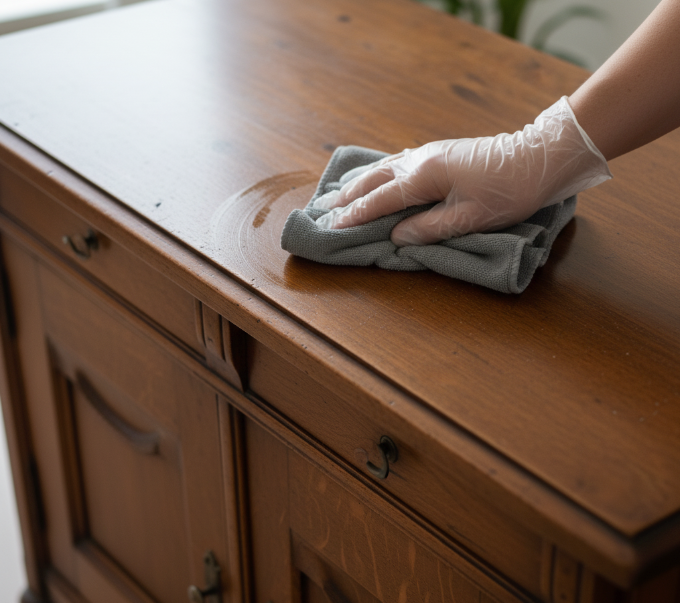
Solution: To safely disinfect wood, work with light, even dampness, and dry immediately to protect patina.
1.2 Cleaning vs disinfecting (and why sequence matters)
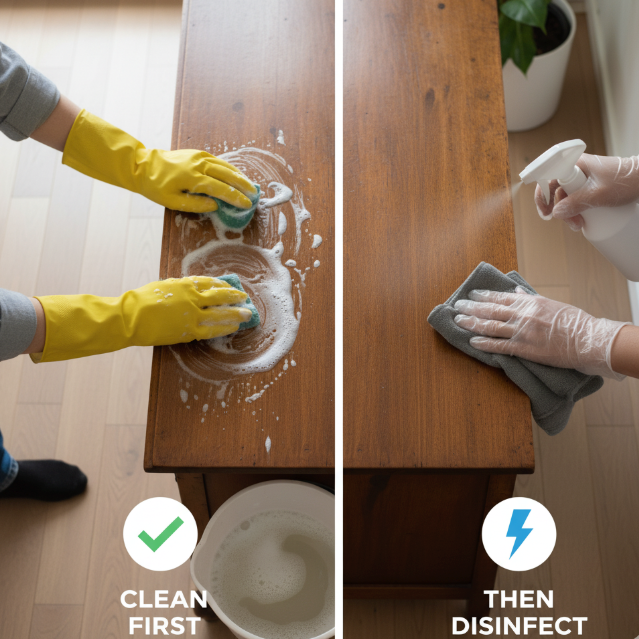
Problem: Disinfectants fail on dirty surfaces.
Approach: Clean first (soap + warm water), then disinfect with an EPA-approved option that matches the substrate.
Solution: This two-step flow improves results for floors, furniture, and cutting boards when deciding how to disinfect wood efficiently.
1.3 Process fundamentals & safety rules
- Dust first to avoid micro-scratches.
- Apply solution to the cloth, not directly to wood.
- Test in an inconspicuous spot.
- Observe contact time and then dry thoroughly.
- PPE: gloves, eye protection, ventilation; never mix chlorine bleach with acids or ammonia.
2. The Science Behind Disinfecting Wood
2.1 Why wood is tricky

- Fibres and porous surfaces limit penetration and extend drying.
- Excess liquid seeps below the finish, trapping moisture and encouraging mold spores.
- In humid Melbourne winters or coastal suburbs, extend drying with airflow.
- Households with kids/pets should favour low-odour options like hydrogen peroxide.
2.2 Factors that change the outcome
- Finish type: Sealed/varnished tolerates more than unfinished antique pieces.
- Temperature & humidity: Affect drying and risk of streaks.
- Contact time & dilution ratio: Too little won’t kill bacteria on wood; too much can haze finishes.
3. Choosing Safe Disinfectants for Different Wood Types
3.1 Common household options

| Solution | Best Use Cases | Dilution Ratio | Contact Time | Finish Risk |
|---|---|---|---|---|
| Hydrogen peroxide (3%) | Disinfect unfinished wood, reclaimed wood, light mould | Use as is | ~5 min | Low |
| Ethanol (70%) | Wood furniture, tables, handles | Ready to use | ~30 sec | Low |
| White vinegar (1:1 water) | Daily cleaning and light disinfecting of sealed wood | 1:1 | ~10 min | Medium |
| Bleach (kitchen boards only) | Non-oily hardwood cutting boards only | 1 tbsp per gallon | ~10 min | High |
Benefits
- Features: Clear dilution rules, short dwell, quick dry.
- Advantages: Lower odour (peroxide/ethanol), broad microbe coverage.
- Benefits: Reliable ways for how to disinfect wood without damaging the finish.
3.2 Purpose-made products
- Wood disinfectant spray for disinfect wood cabinets and touch points.
- Wood disinfectant wipes for quick handles/knobs.
- Wood disinfectant solution for wide areas (lightly damp mop on disinfect wood floors/disinfect hardwood).
4. Step-by-Step: How to Disinfect Wood Safely
4.1 Universal workflow (works for floors, tables, cabinets)
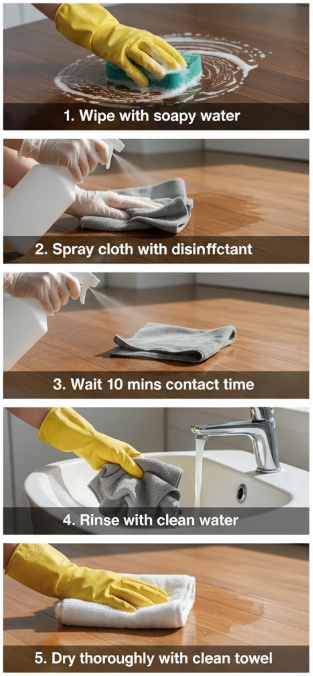
- Clean first: Mild detergent + warm water; wipe with the grain.
- Choose method: Peroxide for unfinished, ethanol for sealed furniture, vinegar mix for routine care.
- Apply correctly: Mist the cloth, not the timber; keep surface evenly damp.
- Hold contact time: 30 sec–10 min depending on chemistry.
- Rinse & dry: Wipe with clean water (if needed), then dry to avoid spotting.
- Re-condition: A thin coat of mineral oil (boards/tops) preserves sheen and reduces absorption.
4.2 Cutting boards: kitchen-grade hygiene
- Goal: how to sanitize a large wood cutting board in the kitchen.
- Scrub with hot soapy water; rinse.
- Disinfect: hydrogen peroxide (3%) or bleach 1 tbsp/gal.
- Hold contact time, rinse well, stand to dry; re-oil routinely.
- This balances remove germs from wood with long-term durability.
4.3 Furniture & tables: finished or antique
- For disinfect wood furniture/disinfect antique wood: prefer ethanol 70% on a soft cloth; short dwell; dry immediately.
- Avoid full-strength acids; protect patina.
- Spot-treat water rings after disinfection, then condition lightly.
4.4 Floors & cabinets: minimal moisture
- disinfect wood floors: lightly damp mop; never flood.
- disinfect wood cabinets: wipe handles/edges with ethanol or spray made for sealed wood.
- Maintain airflow to prevent cupping and haze.
5. DIY vs Professional
Before: You’re unsure how to disinfect wood, worried about finishes, and see recurring mould in a humid room.
After: Surfaces are clean, sanitised, and stable; cutting boards are re-oiled; antiques keep their glow.
Bridge: Use the workflows above for routine care. If mould returns, finishes are unknown, or you manage large areas, a professional clean can reset the baseline and advise sealing.
6. Special Cases: Mould & Outdoor Timber
6.1 How to remove mold from unfinished wood safely
- Vacuum with HEPA (no brushing spores into air).
- Wipe with detergent solution; apply hydrogen peroxide (3%); hold ~10 min.
- Dry below 20% moisture; repeat if needed.
- Seal once fully dry to reduce future colonisation.
6.2 Clean wood from outside (decks, reclaimed)
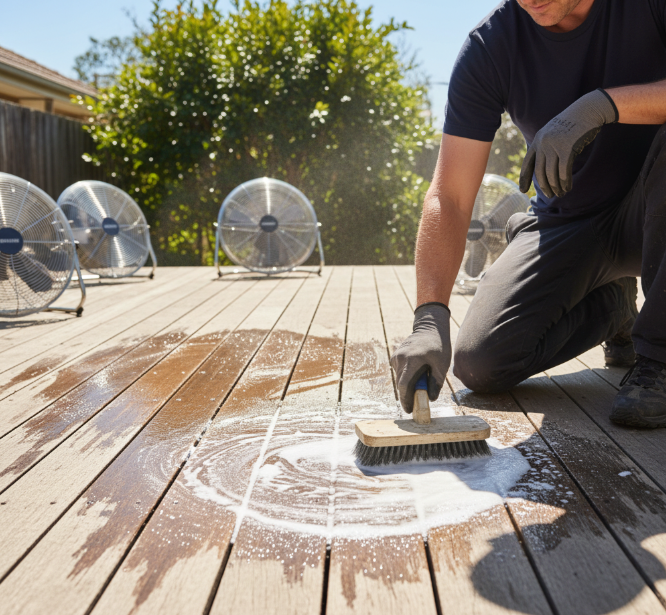
- Start with detergent and a soft brush; avoid harsh blasting.
- For disinfect reclaimed wood, use peroxide; rinse; dry with airflow.
- Light oil or wax once the timber is stable to slow water uptake.
7. Quick-Pick Playbooks
- Apartments with engineered floors: Ethanol wipes for touch points; damp-mop weekly; avoid standing water.
- Family kitchens with big boards: Soap wash → peroxide/bleach (board only) → dry upright → mineral oil.
- Antique sideboards: Dust → ethanol on cloth → immediate dry → wax, keeping the original finish intact.
FAQ
How to disinfect wood without damaging the finish?
Can vinegar or hydrogen peroxide safely disinfect wood?
What is the best cleaner to use on finished wood furniture?
How to remove mold from unfinished wood safely?
How long should disinfectant stay on wood to be effective?
Conclusion
The winning formula for how to disinfect wood is simple: clean first, match the chemistry to the finish, respect contact time, and dry fast.
Re-oil or wax key surfaces so they resist moisture and daily contamination. For move-out prep, see our end of lease cleaning checklist and budgeting guide how much does end of lease cleaning cost.
Need expert help for antiques, stubborn mould, or whole-home care? Melbourne residents can book with O2O Cleaning for tailored advice and safe, finish-friendly results. Preparing for a bond inspection? Our end of lease cleaning service covers timber floors, cabinetry, and every surface agents check.
For more help in the same cleaning tips topic, see Thrifting Without Clutter: 7 Expert Tips to Stay Organized.


