
Table of Contents
Introduction
When it’s time to leave the rental, a clean home is polite. It’s also necessary to get your deposit back. Of the tasks at the end of lease cleaning checklist, the oven usually requires the most attention. A bright, clean oven helps a lot at the final inspection. It impresses your landlord and ensures a smooth handover.

But why is oven cleaning so important? And, how can one get professional results without spending a lot? This guide will discuss the importance of cleaning ovens at the end of a tenancy. It will provide detailed, step-by-step instructions. It will also help you choose between a DIY approach and hiring professionals.
Why is oven cleaning significant in end of tenancy cleaning?
The popular adage “out of sight, out of mind” does not apply to the case of ovens in case of move-out inspections.

Ovens are probably among the most used but rarely cleaned devices in every household. Months or even years might pass. Food, grease, and burnt-on grime will collect inside your oven. They will become harder to clean over time. Normal cleaning does not affect this residue. It will cause odors, reduce cooking effectiveness, and create fire hazards.
Potential Consequences of Negligence to Oven Cleaning
• Deposit Deductions: All appliances should be returned in good condition. A dirty oven may result in cleaning fees subtracted from your deposit.
• Failed Inspections: The property might occasionally fail the final inspection. This may delay your move from the house.
• Hygiene and Safety Issues: Accumulated grease can harbor bacteria and increase fire risk.
Landlord Expectations
Most tenancy agreements require the tenants to ensure that the property is clean and ready for the next occupant.

This includes all appliances provided at the beginning of the tenancy. By cleaning your oven, you are meeting the requirements of your contract and being respectful to the property.
How often is it necessary to clean the oven to have it perform at its best?
The key to a clean oven and one that functions well is consistency.
The frequency of cleaning will depend on your oven usage and the type of food prepared in it. Fatty and greasy foods spread the residue a lot more, making cleaning much more necessary over time.
Recommended cleaning frequency
• Heavy Oven Use (Weekly Baking/Roasting)
• Clean every month: It prevents grease and grime from building up.
• MODERATE OVEN USE: Occasional Cooking
• Clean every three months: This helps maintain cleanliness and efficiency.
• Light Oven Use (Rare Cooking)
• Clean every six months: Even with minimal use, periodic cleaning is important to avoid unexpected buildup.
Tip: Deep cleaning of the oven for the end of the tenancy is highly encouraged a couple of weeks in advance of the move-out date. By then, there should be an allowance made for touch-ups.
Essential Cleaning Equipment When Cleaning Ovens for End of Tenancy
The right tools make the difference when trying to achieve that professional level of cleaning.
Basic Cleaning Supplies
Heavy-Duty Oven Cleaner: Chemicals such as Easy-Off work effectively at taking down heavy grease and burnt-on food. Always remember to ventilate well when using chemical cleaners.


• Natural Cleaners: The need for a toxic-free alternative sparked a resurgence in interest in baking soda and vinegar. These are gentler on surfaces and the environment as well.
• Safety gear: this includes rubber gloves, masks, and safety goggles that protect the skin from harsh chemicals and fumes.
• Scrubbing Tools: Scrubbing pads, brushes, and sponges serve to remove stubborn grime.
• Microfiber Cloths: Ideal for wiping down surfaces without leaving lint or streaks.
Extra Tools
• Spray Bottles: These can be helpful in applying homemade cleaning solutions effectively/uniformly.
• Plastic or Silicone Scrapers: Assist in lifting off residue without scratching the surfaces.
• Old Towels or Newspaper: Place these around the oven area to catch the drips and spills that might occur during cleaning.
How to Clean a Dirty Oven in Easy Steps
Transform your oven from grimy to gleaming in these steps.
Step 1: Preparation of the Area
• Ventilation: Open windows and doors to allow adequate airflow.
• Protect the nearby surfaces: lay out old towels or newspaper.
Step 2: Remove and Soak Oven Racks
• Extraction: Gently remove the racks and other removable items.
• Soak: Alternatively, place them in the sink or bathtub with hot water and a few drops of dish soap or a cup of baking soda.
• Downtime: Let them soak for at least 2 hours; overnight gives the best results.
Step 3: Smear Cleaning Solution around the Interior of the Oven
• Choose Your Cleaner: Use commercial oven cleaners or a homemade paste of baking soda and water.
• Application: Spread the cleaner evenly inside the oven, avoiding heating elements.
• Dwell Time: Allow the solution to sit. Commercial cleaners – typically 30 minutes; baking soda paste – allow it to sit overnight.
Step 4: Cleaning the Oven Door
• Interior Glass: Use the same cleaning solution applied to the interior.
• Exterior Surface: Glass cleaner or vinegar/water mix can be used for a no-streak shine.
• Crevices: A toothbrush or a cotton swab dipped in the cleaner does the job of reaching tight spots.
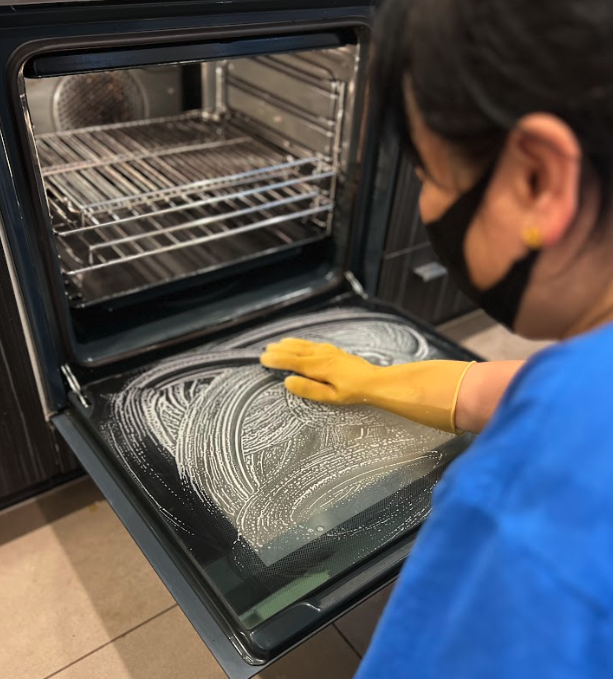
Step 5: Scrub Away the Residue
Interior Scrubbing: Loosened grime is scraped off using a pad or scrubbing brush. To remove stubborn spots, one can make use of a plastic scraper.

• Wipe Down: Wipe off the residue with a wet microfiber cloth. Change the wringing of cloth frequently.

Step 6: Rinsing and Drying
• Final Wipe: Take a fresh cloth and slightly moisten it to remove the remaining cleaner.
• Drying: allows air drying by leaving the oven door open or assists in faster drying using a dry cloth.
Step 7: Clean oven racks
• Scrubbing: Once soaked, scrub the racks with a scouring pad, removing softened grime.
• Rinse: One should rinse with plenty of warm water.
• Dry: Wipe them down or allow them to air dry before reinserting.


Step 8: Reassemble the Oven
• Replace Components: Once all is dry, replace the racks and other removable parts.
• Finishing Check: Ensure all parts are fitted correctly and the oven is clean and dry.
Safety Precautions
• Protection: Always wear gloves and a mask with stronger chemicals.
• Avoid Mixing Chemicals: Different commercial cleaners should not be mixed since it will release toxic fumes.
• Read labels: Always follow instructions on cleaning product labels carefully.
DIY versus Professional End-of-Tenancy Oven Cleaning
The weighing of your options often can help a person to choose the most effective and efficient way.
DIY Oven Cleaning

professional oven cleaning


Making the Decision
Consider factors like budget, time constraints, and the current state of the oven. If your oven has years of buildup or is in short supply of time, you may consider hiring professionals for the best result
Top Oven Cleaning Products You Can Trust
The right choice of products can facilitate the process and improve cleaning results.
Natural Cleaning Solutions
• Baking Soda and Vinegar
• Usage: Effectively used for regular cleaning and light to moderate grime.
• Benefits: Non-toxic, environmentally friendly, and inexpensive.
• Lemon Juice
• Usage: The acidity helps break down grease.
• Benefits: Leaves a fresh scent.
Commercial Oven Cleaners
• Easy-Off Professional Fume Free Max Oven Cleaner

• Application: Ideally applied to heavy grease and burnt-on food.
• Benefits: No strong fumes; safe for self-cleaning ovens.
• Mr. Muscle Oven Cleaner

• Application: Powerful formula for tough stains.
• Benefits: Works quickly, thus reducing cleaning time.
Environmentally-friendly business cleaners
• Method Kitchen Degreaser
• Application: Plant-based formula for light to moderate grease.
• Configuration and Benefits: Biodegradable and safe for the environment.
Tips to Choose the Perfect Product
• Evaluate the Condition of the Oven: If it has heavy buildup, it may require a strong commercial cleaner.
• Check Compatibility: Ensure the product is compatible with your oven type.
Read reviews. They may show their effectiveness through customer feedback.
• Cleaning a Self-Cleaning Oven: Avoiding Damage Even self-cleaning ovens take some work.
Understanding the Function of Self-Cleaning
• High-Temperature Cleaning: The oven burns off food residues at very high temperatures.
• Safety Locks: The oven door locks automatically during the process.
Safety Steps for Using the Self-Cleaning Feature
1. Remove all items from the Racks, thermometers and all other items or accessories.
2. Loosen Debris: Clear off large pieces of food that may cause smoke excessively.
3. Manufacturer Instructions: Follow the prescribed self-cleaning cycle.
4. Provide Ventilation: Open windows to moderate smoke or odors.
5. Post Cleaning Wipe Down: After the cycle and after the oven cools, residual ash is wiped away by a damp cloth.
Cleaning Oven Racks Separately
• Avoid Damage: The intense heat may cause discoloration or warping of racks.
• Alternative Cleaning: Soak and scrub them like in a regular oven.
Cautionary Notes
• Stay Nearby: Remain at home during the self-cleaning cycle in case of emergencies.
• Avoid Chemical Cleaners: Do not use commercial oven cleaners in self-cleaning ovens unless instructed.
Additional Tips on How to Keep Your Oven Clean During Your Tenancy
Regular maintenance reduces the need for intensive cleaning sessions.
• Wipe Down After Use: Right after the oven cools down, spills and splatters can easily be wiped off so they do not harden.
• Utilize oven liners. Place a removable liner in the bottom to catch drips.
• Cover Dishes: Cover dishes with a lid or aluminum foil to prevent splatters.
• Regular Light Cleaning: Give a quick clean every week or every other week.
• Replace Seals: Check that the seals of the oven door are in good condition to ensure efficiency and prevent grime from building up.
Frequently Asked Questions
Q: Is the self-cleaning function available a little while before moving out?
A: It is not advisable to use the self-clean feature near moving. The high degree of temperature involved may cause malfunctioning. It’s safer to clean it manually or schedule a self-cleaning accordingly, at least one week before moving so that in case anything goes wrong,.
Q: Will the natural cleaners work on super dirty ovens?
A: Natural cleaners are great for regular maintenance, but they tend to have trouble when it comes to heavy buildup that has been burnt onto the metal. At this point, the service of a commercial cleaner or professional might be in order.
Q: How much does professional oven cleaning cost?
Prices vary by location and condition of oven, but are generally in the range from $80 to $150. Some companies offer a package deal for end-of-tenancy cleaning. Conclusion: Your End of Tenancy Cleaning Must Achieve a Perfectly Clean Oven. Leaving the property in good condition is important. It may ensure a smooth transition from the property. Cleaning the oven is not only something the landlord will appreciate but also reflects positively on you as the tenant.
Key Takeaways
• Start Early: Don’t wait until the last minute to clean your oven.
• Choose the Right Method: Assess whether the DIY or Professional cleaning service suits your needs.
• Maintain Regularly: Consistent upkeep makes End-of-lease cleaning easier.
Conclusion
Take your time and clean the oven because this is another step to help you get the full deposit and leave on good terms with your landlord.

For a stress-free move, Melbourne residents should use Your Company Name. We offer end-of-leasecleaning, including oven cleaning . Contact us today at 0468045841 or through o2ocleaning.com.au to book your appointment.
For more help in the same end of lease cleaning topic, see Proven Methods: How to Remove Hair from Carpet.
For more help in the same end of lease cleaning topic, see How to Clean the Kitchen for Bond Cleaning: Tips to Secure Your Deposit.


