
Table of Contents
Introduction
End of lease house cleaning should mirror how agents inspect.
Use the original Condition Report as your baseline, then schedule by zones: kitchen、bathroom、living/bedrooms、window tracks、fine details.
Document everything with dated before/after photos and invoices so you can defend work during any VCAT bond dispute.
Allocate extra time to high-risk areas: oven and cooktop、rangehood filter、dishwasher filter、window tracks、skirting boards、switch plates、exhaust fan blades.
If you need ongoing maintenance outside moving periods, End of Cleaning page
TL;DR: End of lease house cleaning should follow the agent’s inspection process and meet the “reasonably clean” standard in Victoria. Use your condition report as a baseline, clean by zones (kitchen, bathroom, living areas, and details), and prioritise high-risk items like ovens, window tracks, skirting boards, and filters. Document everything with photos and invoices to protect your bond. For heavy cleaning or tight timelines, professional services offer faster results and lower dispute risk.
1. Plan and Methodology
1.1 Read the Condition Report and convert it into a cleaning scope
Scan each line of the Condition Report and mark variances.
Group tasks by zone and add three tags for each item: effort level、tools/chemicals required、drying or dwell time.
Sequence wet work → dust → polish → glass → floors.
Close each zone with a small photo set taken at the same angles as the “before” shots.
1.2 A sample week schedule aligned to handover
- Day 1:Kitchen degrease, oven strip-down, rangehood filter soak, stovetop grease removal.
- Day 2:Bathroom scale and mould treatment, grout cleaning, mirrors, exhaust fans.
- Day 3:Bedrooms and living areas, skirting boards, window tracks, blinds, switches, door frames.
- Day 4:Professional carpet steam cleaning if the lease requires it, wall spot-clean, final dust and polish.
- Day 5:Self-check, re-check, final walkthrough; remove refuse; floors last.
1.3 The validation loop: self-check → re-check → final walkthrough
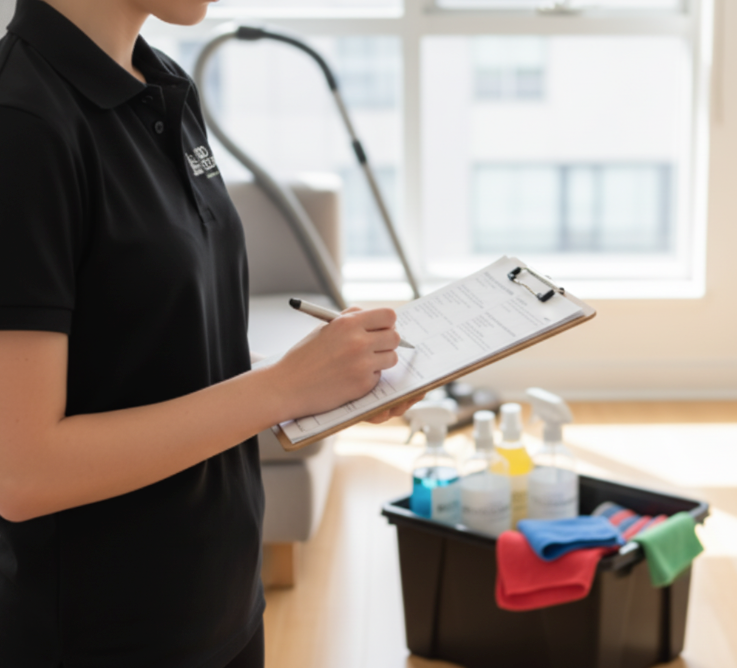
Self-check against your internal list and the Condition Report.
Re-check compares photos to expected outcomes and the rental inspection checklist.
Final walkthrough follows agent flow from entry to exit with full lighting and open blinds.
Log remaining defects (scuffs, drying issues, ventilation needs) and book quick returns if required.
2. Safety, Risks, and Compliance
2.1 Chemistry, PPE, ventilation, and disposal
Strong alkaline oven cleaners may contain sodium hydroxide, which can burn on contact.
Wear gloves、mask、eye protection,and keep spaces ventilated.
Never mix acidic and alkaline products; only decant into labeled containers; keep children and pets out.
Dispose of residues per local guidance and keep MSDS from manufacturers with your job records.
2.2 The five most common bond deduction mistakes
Bond deductions often result from avoidable cleaning oversights during end of lease house cleaning.
Understanding the top five mistakes helps tenants prevent costly re-cleans or withheld deposits.
Each mistake below outlines what went wrong, its direct consequence during inspection, and the correct professional approach for a compliant rental handover.
| Mistake | Consequence | Correct Method |
| Spraying strong alkali into a self-cleaning oven cavity | Damaged enamel coating and visible streaks noted by agents | Use only the oven’s self-clean mode; clean glass and racks separately with approved products |
| Ignoring window tracks and skirting boards | “Visible dust build-up” identified during inspection | Vacuum debris, brush corners, damp wipe, dry thoroughly, and photograph each segment |
| Skipping dishwasher filters and exhaust fan blades | Odour, grease, or lint reported in the inspection checklist | Remove filters, clean and rinse thoroughly, dry, refit, and document with photos |
| Over-wet mopping on timber or luxury floors | Floor swelling, haze, or surface streaks | Use near-dry microfiber pads with manufacturer-approved cleaner and ensure full drying |
| No proof of professional carpet steam cleaning when required | Bond deduction or mandatory re-clean order | Book professional carpet steam cleaning early and retain the invoice in your handover pack |
2.3 Special prohibitions and device rules
Do not treat anti-glare screens or coated glass with unapproved chemicals.
Isolate power before dismantling rangehoods、ovens、exhaust fans.
Store chemicals safely and maintain PPE at all times.
Tenancy-related procedures must align with local requirements, according to “Consumer Affairs Victoria (CAV)”.
3. Room-by-Room Deep Clean
3.1 Kitchen: disassembly, filtration, and degreasing
Take “before” photos of oven, racks, glass, knobs, seals.
Deep-cleaning an oven typically requires 1–2 hours depending on soil and disassembly.
Remove the oven door only if the manual allows; treat oven glass with approved product; do not spray strong alkali into a self-clean cavity.

Soak rangehood filters in hot water with degreaser, rinse, and dry fully before refitting.
Detail the stovetop and rear splashback, then polish stainless along the grain.
Clear the dishwasher filter, wipe handles and switch plates, and end with matching “after” photos.
Kitchen — issue → method → acceptance
- Baked-on carbon on oven glass → Approved cleaner on glass; rinse and dry → Clear glass with no film under light
- Greasy rangehood filter → Hot soak, degreaser, soft brush, rinse, dry → No residue; unobstructed airflow
- Stovetop crevice grease → Remove knobs if allowed; swab with degreaser; wipe dry → No tactile residue; uniform sheen
3.2 Bathroom: scale, mould, and grout control
Work top-down: fixtures and frames, glass, tiles, then floor.
For grout cleaning, a practical DIY mix is 1 part isopropyl alcohol + 1 part Dawn + 2 parts warm water.
Apply along each line with a 10–15-second dwell/brush rhythm, then rinse, squeegee, and towel dry to prevent spotting.

Treat bathroom mould early to allow ventilation and re-inspect later the same day.
Bathroom — issue → method → acceptance
- Limescale haze on shower glass → Descaler, gentle pad, rinse, squeegee, dry → Clear glass without chalk lines
- Mould at wall/floor junctions → DIY mix above; agitate; rinse; dry; ventilate → Even grout tone with no visible spores
- Lint on exhaust fan blades → Isolate power; remove cover; clean blades; refit → No fluff; cover sits flush
3.3 Living areas and detail points agents check beyond surfaces
Focus on skirting boards, door frames, window tracks, blinds heads, switch plates, vent grilles.
Vacuum tracks, brush corners, damp wipe, and dry so the slider runs smoothly.
After carpet steam cleaning (if required), check edges and thresholds.
Living & details — issue → method → acceptance
- Grit in window tracks → Crevice vacuum, brush, damp wipe, dry → Smooth slide; clean corners
- Fingerprints on switch plates → Mild cleaner on cloth; wipe and dry → Even finish under flash test
- Dust on vent covers → Remove, wash, dry, refit → No visible lint; uniform airflow

4. Costs and Choosing DIY vs Professional
4.1 When DIY makes sense and when to call professionals
DIY suits light-to-moderate soil, flexible timelines, and smaller properties.
Choose professionals for heavy grease, visible mould spread, tight deadlines, or where the tenancy requires professional carpet steam cleaning.
Keep records for quotes and bookings, and align work dates to key return.
Agree on a re-clean window and how agent feedback will be provided in writing.
4.2 Re-clean policy, documentation, and agent communication
Confirm the re-clean guarantee terms before work starts.
Centralise invoices and before-and-after photos per zone.
If an issue is raised, request written feedback with photos from the agent and respond within the agreed window.
Table A · Key Acceptance Checklist

| Area | Task | Tools / Chemicals | Time / Contact Duration | Acceptance Standard | Common Deduction Reason |
| Kitchen | Oven glass carbon removal | Approved oven cleaner, soft pad | Total deep clean 1–2 hours | Clear glass, no film | Strong alkali sprayed into self-cleaning cavity |
| Kitchen | Rangehood filter cleaning | Hot water + degreaser | Soak 10–20 minutes | No grease film, smooth airflow | Filter reinstalled before drying |
| Kitchen | Dishwasher filter cleaning | Neutral cleaner, soft brush | 5–10 minutes | No odor, no residue | Ignored debris at the base |
| Bathroom | Glass scale removal | Descaler + squeegee | Contact 2–5 minutes | No white haze, no water marks | Incomplete drying |
| Bathroom | Grout cleaning | 1 part isopropyl alcohol : 1 part Dawn : 2 parts warm water | 10–15 seconds per line | Even tone, no mould spots | Insufficient rinsing |
| Living Area | Skirting board dusting | Soft brush + microfiber cloth | 10–15 minutes per room | No dust line | Missed floor-level buildup |
| Detail | Window track & slider cleaning | Vacuum + brush | 5–10 minutes per window | Smooth slide, no grit | Sand or dust left in corners |
| Detail | Exhaust fan blades | Power off, disassemble & wash | 10–15 minutes | No lint on blades | Turned on before drying |
Table B · DIY vs Professional Cleaning Comparison
| Option | Estimated Duration (2B1B) | Cash Cost | Risk Level | First Inspection Pass Rate | Includes Re-clean Guarantee |
| DIY | 3–5 days (staged execution) | Low–Medium (tools and chemicals) | Medium (process and chemical control) | Moderate (depends on experience) | No |
| Professional Team | Completed within 1 day | Medium–High (may include steam cleaning) | Low–Medium (standard workflow) | High (verified process and documentation) | Yes (as per service terms) |
FAQs
Does end of lease house cleaning guarantee a full bond back?
How long does a professional end of lease clean take for a typical 2B1B in Melbourne?
What do agents most commonly check beyond visible surfaces?
Is professional carpet steam cleaning mandatory, and how do I verify it?
What photos and receipts should I keep for bond dispute readiness?
Conclusion and Next Steps
End of lease house cleaning succeeds when a zone-based plan, safe chemistry, and rigorous documentation align with agent workflows.
Use the acceptance checklist、issue-method-acceptance steps、and the DIY vs professional comparison to choose the right path for your timeline and risk.

If the lease requires professional services, schedule them early and retain all proof.


