
Table of Contents
Introduction
Moving out of a rental in Melbourne? Carpets are one of the first things your property manager will scrutinise. Stains, odours, and traffic lanes can trigger a bond dispute — even when the rest of the property looks spotless.
For the complete bond-back service, see our end of lease cleaning in Melbourne page.
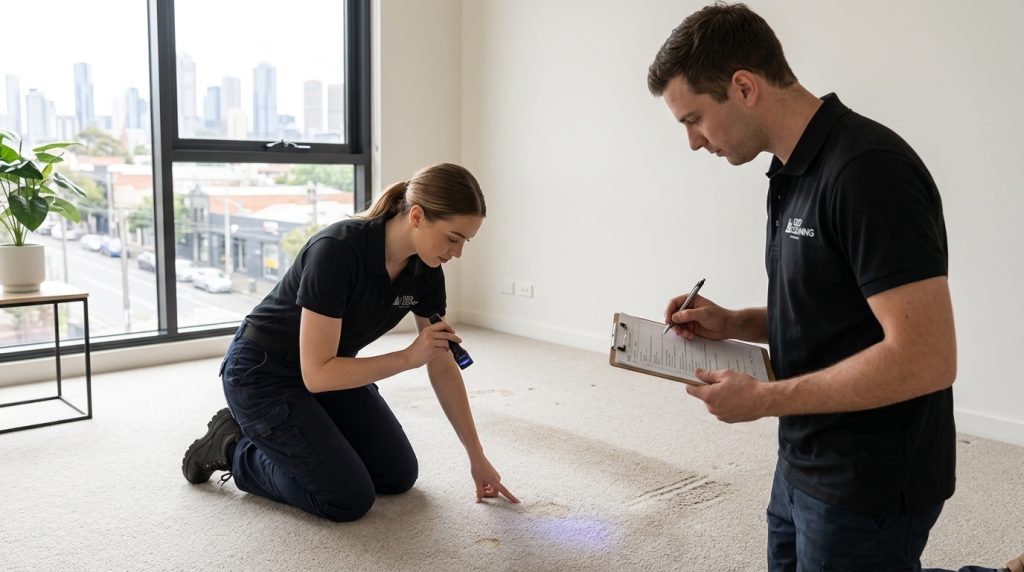
According to the RTBA 2023-24 Annual Report, 64% of Victorian bonds are returned in full. Another 26% are split between tenant and landlord, and 10% go entirely to the landlord. Carpet condition plays an outsized role in which group you fall into. A single pet stain or a set of dingy hallway lanes can shift thousands of dollars from your pocket to your landlord’s.
This guide walks you through the complete process — from auditing your carpets and treating stains, to choosing between DIY and professional cleaning, understanding your legal rights, and documenting everything for a smooth bond return.
TL;DRTL;DR: Carpet cleaning is one of the biggest factors in getting your Melbourne bond back. In Victoria, 64% of bonds are returned in full (RTBA 2023-24 Annual Report). Audit your carpets early, treat stains with the right products, book hot water extraction 2-3 days before handover, and keep your invoice and photos as proof.
Why Does End of Lease Carpet Cleaning Matter for Your Bond?
In Victoria, 64% of bonds are returned in full to tenants, while 26% are shared and 10% go entirely to the landlord (RTBA 2023-24 Annual Report). Carpet condition is one of the most common reasons agents withhold part of a bond.

Carpets cop a beating during a tenancy. Coffee spills soak into fibres. Pet accidents leave invisible residue that smells worse over time. High-traffic hallways develop shadowy lanes that regular vacuuming can’t fix. These are exactly the issues property managers look for during a final inspection.
Here’s why it matters practically: your condition report from move-in is the benchmark. If your carpets looked fresh when you moved in, they need to look fresh when you move out. “Reasonably clean” is the legal standard under Victorian tenancy law — but what counts as reasonable often depends on evidence.
Professional carpet cleaning with hot water extraction is widely accepted by Melbourne agents. It produces a receipt that proves the work was done, and many providers offer a bond-back guarantee. That combination makes it far easier to get your full bond returned.
What Do Agents Actually Check About Your Carpets?
Property managers compare your carpets against the ingoing condition report — every stain, wear mark, and odour that wasn’t noted at move-in becomes a potential deduction. Knowing what they look for gives you a head start.
Here’s what agents typically inspect:
- Visible stains. Coffee, wine, food, and pet marks are the most common. Agents will check rooms in natural light, so anything you can see, they’ll see too.
- High-traffic wear. Hallways, doorways, and the path between the lounge and kitchen develop compressed, discoloured lanes. These stand out against the rest of the carpet.
- Odours. Pet urine, smoke, and musty smells are flagged immediately. Agents sometimes check with the windows closed to trap any lingering scent.
- Evidence of cleaning. Many agents specifically ask for a receipt or invoice from a professional cleaner. The receipt should list the address, date, method used, and company details.
- Comparison to condition report. This is the real test. Photos from your ingoing report are compared against the carpet’s current state. If you didn’t note existing damage at move-in, it becomes harder to argue it wasn’t yours.
The most common surprise for tenants is traffic lane shadowing. You might not notice it because you see the carpet every day. But agents spot it instantly because they’re comparing against a condition report photo taken when the carpet was freshly cleaned.
Don’t wait until inspection day to discover a problem. Walk through the property with fresh eyes — or better yet, follow the audit process below.
How Do You Audit Your Carpets Before Moving Out?
A quick self-audit takes 20 minutes and can save you hundreds in bond deductions. Walk every room in daylight with your condition report in hand, checking for issues you’ve stopped noticing.
Use this checklist:
- Open blinds and curtains. Inspect in natural daylight — overhead lights hide stains and shadowing.
- Walk the traffic lanes. Stand at each doorway and look along the carpet. Compressed, discoloured paths between rooms are the most common issue.
- Check under furniture. Move beds, couches, and bookshelves. Stains hidden under furniture still count.
- Get on your knees and sniff. Seriously. Pet odours live in the underlay. If you can smell anything with your nose 30 cm from the carpet, an agent will notice.
- Take date-stamped photos. Photograph every room before cleaning starts. These become your “before” evidence.
- Compare to your condition report. Any damage not listed on the ingoing report is your responsibility to address.
This audit helps you decide whether DIY cleaning is enough or whether you need a professional. As a general rule: if you find stains, odours, or visible traffic lanes, professional hot water extraction is the safer choice for bond recovery.
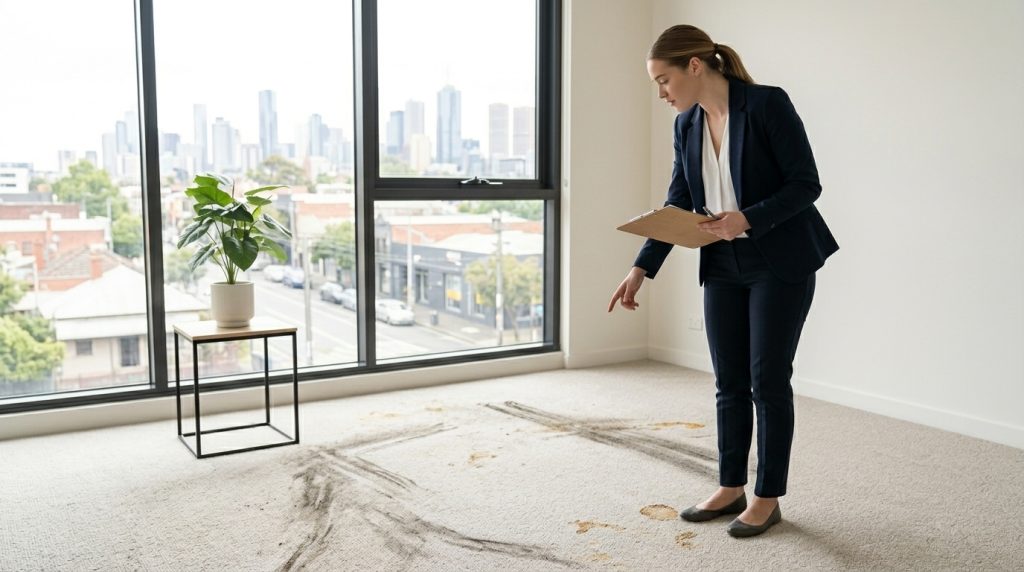
For a full room-by-room inspection guide, see the end of lease inspection checklist for Melbourne.
How Do You Remove Common Carpet Stains?
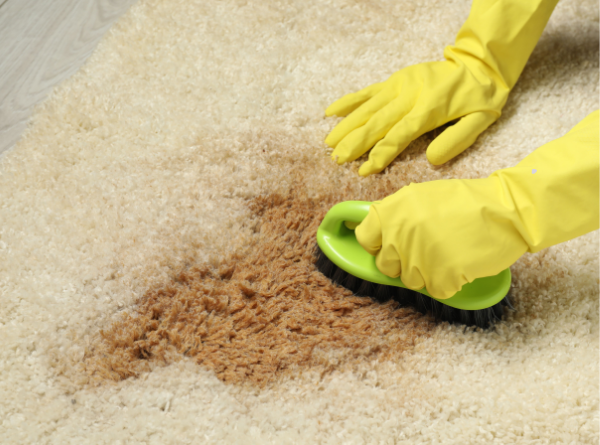
Not every stain needs a professional. Small, fresh marks can often be treated at home with the right technique. The key rule: always blot, never rub.
Coffee and Tea Stains
Blot up as much liquid as possible with a clean white cloth. Mix one tablespoon of mild dishwashing detergent with two cups of warm water. Apply to the stain with a cloth, working from the outside in. Blot with a dry towel and repeat until the mark lifts. Finish by blotting with plain water to remove detergent residue.
Red Wine Stains
Act fast. Blot the spill immediately, then pour soda water over the stain to dilute it. Blot again. If the stain persists, apply a commercial carpet stain remover designed for tannin-based stains. Avoid hot water — heat sets wine stains into the fibres.
Pet Urine and Odours
Use an enzyme-based cleaner, not a standard carpet shampoo. Enzymes break down the uric acid crystals that cause lingering smell. Saturate the affected area, let it sit for 10-15 minutes, then blot thoroughly. Never use ammonia-based cleaners on pet stains — urine contains ammonia, so it can actually encourage pets to re-mark the spot.
Slime and Sticky Residue
Scrape off as much excess as possible with a blunt knife. Apply white vinegar or rubbing alcohol to a clean cloth and dab the residue. Work gently to avoid spreading. Once the sticky material dissolves, blot with warm water and dry with a towel.
For set-in stains older than a few weeks, DIY treatment has diminishing returns. Professional hot water extraction with pre-spray agitation is significantly more effective on oxidised stains.
What Is the Step-by-Step Carpet Cleaning Method?
Professional-grade carpet cleaning follows a six-step process: prepare, vacuum, spot-treat, extract, dry, and document. Each step matters — skip one and you risk a failed inspection.
1. Prepare the Room
Clear all furniture from carpeted areas. Remove rugs, mats, and anything sitting on the floor. This exposes the full carpet surface, including hidden stains and edge grime. Preparation also protects your furniture from moisture.
2. HEPA Vacuuming
Vacuum the entire carpet with two slow passes — one in each direction. Use a HEPA-filter vacuum if possible. Pay extra attention to edges, corners, and high-traffic lanes. This step removes dry soil, grit, and hair. If you skip it, that grit turns to mud during wet cleaning and can cause browning as the carpet dries.
3. Spot Treatment
Treat individual stains before the main extraction. Use enzyme-based formulas for protein and urine stains. Use oxidising agents for dye-based stains like wine, coffee, and tea. Apply the product, let it dwell for the recommended time, and agitate gently with a brush. Don’t rinse yet — the extraction step handles that.
4. Hot Water Extraction
This is the core of the process. A pre-spray solution is applied to the carpet, followed by gentle brush agitation to loosen embedded soil. The extraction machine then injects hot water and immediately vacuums it back out, pulling dissolved dirt with it. Use controlled, overlapping passes. Recross high-traffic lanes and doorway transitions — these areas need extra attention.
According to the Carpet and Rug Institute, a structured top-to-bottom order — dust and dry vacuuming before wet cleaning — reduces rework and cross-contamination while improving the success rate.
5. Drying and Ventilation
Cross-ventilate the property by opening windows on opposite sides. Place fans in doorways to circulate air across the carpet. Avoid walking on the carpet with outdoor shoes during drying. In Melbourne’s climate, allow 6-8 hours minimum for drying. In cooler or humid months, a dehumidifier speeds things up considerably.
6. Final Inspection and Proof of Work
Photograph every room after cleaning. Ensure your invoice or receipt includes the property address, date of service, cleaning method used, and the company’s details. This receipt is your primary evidence if the agent questions whether professional cleaning was done.
Should You Choose DIY or Professional Carpet Cleaning?
For most Melbourne rentals, professional carpet cleaning offers a stronger path to bond recovery. According to Gitnux (2026), 85% of customers report satisfaction with professional carpet cleaning, and 88% of professional operations use truck-mounted hot water extractors.
Here’s how the two options compare:
| Factor | DIY | Professional |
|---|---|---|
| Cost | $50-$100 (rental machine) | $180-$320 (2-3 bed) |
| Heat and suction | Limited | Industrial-grade |
| Drying time | 12-24 hours | 4-8 hours with fans |
| Bond-back guarantee | No | Yes (most providers) |
| Receipt accepted by agents | Rarely | Yes |
| Pet stain and odour removal | Poor | Effective |
DIY machines from hardware stores look similar to professional equipment, but the difference is power. Rental machines heat water to around 60 degrees Celsius and generate moderate suction. Truck-mounted professional units reach 80-100 degrees Celsius and extract far more moisture, which means deeper cleaning and faster drying.
The receipt matters more than most tenants realise. Many property managers won’t accept a bond return without a professional cleaning invoice. Even if your DIY effort leaves the carpet looking great, the lack of documentation can stall your bond.
The real cost comparison isn’t just the cleaning fee — it’s the cleaning fee versus the bond amount at risk. A $250 professional clean to protect a $2,000 bond is a 12.5% insurance cost. That maths usually favours the professional.
How Much Does Carpet Cleaning Cost in Melbourne?
The national average for professional carpet cleaning is $30.49 per square metre (ServiceSeeking, 2026). Melbourne prices vary by room size and property type, with most providers offering per-room or per-property pricing.
Price Per Room
| Room Size | Price Range |
|---|---|
| Small room (10 m² or less) | $40-60 |
| Standard room (11-18 m²) | $60-$80 |
| Large room (19-28 m²) | $70-$90 |
Price Per Property Size
| Property | Typical Cost |
|---|---|
| 1-bedroom | $50-$100 |
| 2-bedroom | $100-$150 |
| 3-bedroom | $150-$250 |
| 4+ bedroom | $250-$350+ |
These ranges assume standard hot water extraction. Add-ons like stain protection, deodorising, or heavy pet treatment cost extra — typically $$50-80per room.
Saving Money with Bundle Packages
Most Melbourne cleaning companies offer a discount when you bundle carpet cleaning with a full end of lease cleaning package. Bundling can save 10-20% compared to booking services separately. It also means one company handles everything, which simplifies scheduling and accountability.
What Are Your Rights Around Contracts, Pets, and “Normal Wear and Tear”?
Consumer Affairs Victoria Guideline 2 states that tenants must leave the property “reasonably clean.” Guideline 3 clarifies that traffic marks on carpets constitute fair wear and tear — meaning the landlord pays if they want those cleaned.
This distinction matters. Not every carpet mark is your responsibility. Here’s what Victorian tenancy law actually says:
- Fair wear and tear is the landlord’s cost. Gradual carpet fading, minor flattening from furniture, and light traffic patterns are normal. You aren’t required to return the carpet to “new” condition.
- Professional cleaning clauses have limits. A lease clause requiring professional carpet cleaning is only enforceable if the property was professionally cleaned before you moved in (Tenants Victoria). If it wasn’t, you only need to return the carpet in a “reasonably clean” state.
- Bond claim timeframes are strict. After your tenancy ends, the landlord has 10 business days to lodge a bond claim. You then have 14 days to respond. Missing these deadlines can affect the outcome.
- Dispute resolution is free. If you disagree with a bond claim, you can access free dispute resolution through the Residential Disputes Resolution Victoria (RDRV) before escalating to VCAT (Consumer Affairs Victoria).
Pets add a layer of complexity. If your lease permitted pets, normal pet-related wear may be classified as fair wear and tear. But significant damage — deep urine stains, chewed carpet edges, or strong odours — typically falls on the tenant.
For a detailed guide on handling bond disputes, see how to avoid a bond dispute in Melbourne.
What Mistakes Should You Avoid?
The most common carpet cleaning mistakes actually make the problem worse. Excess moisture, wrong products, and rushed drying cause browning, odours, and wicking stains that show up after you’ve already handed back the keys.
Avoid these errors:
- Using excess moisture. Over-wetting the carpet pushes dirty water into the underlay. As it dries, dissolved soil wicks back to the surface as brown marks. Use controlled extraction passes and don’t soak the carpet.
- Using coloured rags or towels. Dye from coloured cloths can transfer to wet carpet fibres, creating a new stain. Always use white cloths for blotting and cleaning.
- Skipping vacuuming before wet cleaning. Dry grit and soil turn to mud when they get wet. This grey, silty residue is extremely difficult to remove and causes the carpet to look worse after cleaning.
- Only cleaning visible areas. Moving the couch to reveal a pristine rectangle next to a dingy carpet doesn’t help. Clean the entire room, including under and behind furniture.
- Not allowing enough drying time. Carpet needs 6-8 hours to dry properly with ventilation. Walking on damp carpet compresses the pile and can leave new marks. Schedule your clean early enough to allow full drying before inspection.
What If the Carpet Doesn’t Look “Done” After Cleaning?
Sometimes carpets don’t look perfect even after a proper clean. Shadowing, lingering odours, and wicking spots are fixable — but you need to know the cause before choosing a remedy.
Shadowing on Lanes
Traffic lane shadows happen when the carpet pile is compressed in one direction. A second extraction pass running perpendicular to the original direction lifts more soil from the base of the fibres. After extracting, use a carpet grooming brush or rake to stand the pile upright. This creates a uniform appearance and helps the carpet dry evenly.
Persistent Odour
If the carpet smells after cleaning, the odour source is usually in the underlay, not the fibres. Re-treat the area with an enzyme-based solution and let it dwell for 15-20 minutes. Extract again with slow, overlapping passes. Run a dehumidifier in the room to pull moisture from the underlay. In severe cases — particularly with old pet urine — the underlay may need replacement.
Wicking Spots After Drying
Wicking happens when soil trapped deep in the carpet or underlay migrates to the surface as moisture evaporates. Lightly re-mist the affected area with plain water or a diluted cleaning solution. Extract with slow strokes and direct a fan at the spot. Avoid over-wetting, which restarts the wicking cycle.
What Melbourne-Specific Tips Should You Know?
Melbourne’s variable weather and apartment-heavy rental market create unique challenges for end-of-lease carpet cleaning. Planning around the climate and building logistics avoids common headaches.
- Pick a dry day. Melbourne’s autumn and winter months are cool and damp, which slows drying dramatically. If you can schedule your carpet clean on a dry, mild day, do it. Check the forecast and aim for a day with low humidity.
- Keep carpet work last in your cleaning schedule. Clean walls, kitchens, and bathrooms first. Carpet cleaning should be the final step so you’re not walking across freshly cleaned carpet with dirty shoes while finishing other tasks.
- Apartments need extra planning. Liaise with building management about lift access, hose connection points, and parking for the cleaning van. Some buildings restrict cleaning to certain hours or require a booking for the service lift.
- Corridors and living room lanes need extra passes. These high-traffic areas accumulate more soil than bedrooms. Budget extra time and attention for hallways, living room walkways, and doorway transitions.
How Should You Handle Documentation and Re-Cleans?
Proper documentation is your strongest protection in a bond dispute. Keep your invoice, take before-and-after photos, and agree on a re-clean window with your cleaning provider.
- Keep your invoice. It should list the property address, date, cleaning method (hot water extraction), and the company name and contact details. A vague receipt won’t satisfy most agents.
- Take before-and-after photos. Photograph each room from the same angle before and after cleaning. Include a timestamp. These photos serve as evidence that professional work was completed.
- Agree on a re-clean window. Most reputable providers offer a 7-day re-clean window. If the agent flags an issue within that window, the cleaner returns at no extra charge.
- Know your dispute options. If a bond dispute arises, you can access free mediation through the Residential Disputes Resolution Victoria (RDRV) before going to VCAT (Consumer Affairs Victoria). Proper documentation strengthens your position significantly.
What Does the Preparation Timeline Look Like?
Carpet cleaning fits into the final days of your move-out schedule. Working backwards from handover day keeps everything on track.
- Day 4-5 before handover: Finish cleaning walls, kitchen, bathrooms, and all non-carpet surfaces. Complete any repairs. The goal is to have the property empty and clean except for the carpets.
- Day 3: Book your carpet cleaning appointment. Confirm access — parking, water, power, and building access for apartments.
- Day 2: Carpet extraction completed. Open windows, run fans, and minimise foot traffic. Wear clean socks if you need to walk through. Allow 6-8 hours minimum for drying.
- Day 1: Re-check traffic lanes, edges, and any spots that may have wicked. Treat and re-extract wicking marks if needed. Direct fans at problem areas.
- Handover day: Photograph all carpeted rooms. File your cleaning receipt. Attach documentation to the outgoing condition report.
For a complete room-by-room moving-out guide, see the end of lease cleaning checklist.
FAQ
Are tenants required to hire professional carpet cleaners in Melbourne?
Is DIY carpet cleaning enough to pass a rental inspection?
How long does carpet cleaning take and how long to dry?
How do I remove pet odours from carpet before moving out?
What happens if the agent says the carpet still isn’t clean enough?
Conclusion
Getting your bond back starts with a plan. Audit your carpets in daylight, treat stains with the right products, book professional hot water extraction 2-3 days before handover, allow proper drying time, and document everything with photos and a detailed receipt.
The process is straightforward: audit, treat, extract, dry, document. Each step builds on the last. Skip one — especially documentation — and you weaken your position if a dispute arises.
Know your rights under Victorian tenancy law. Fair wear and tear is the landlord’s responsibility. Professional cleaning clauses have limits. And free dispute resolution exists through the RDRV if you need it.
If you’re looking for professional carpet cleaning bundled with a full end-of-lease clean in Melbourne, O2O Cleaning offers final inspection preparation packages with documented results.
For more guidance on your move-out process, explore the bond back cleaning guide.
For more help in the same end of lease cleaning topic, see Bond Cleaning in Melbourne Reviews.
For more help in the same end of lease cleaning topic, see End of Lease Cleaning with Pets: How to Secure Your Bond Back Easily.
For more help in the same carpet cleaning topic, see Why Professional Steam Carpet Cleaning is Essential.


